
In 2026, choosing the best wall mounted battery means looking beyond a sleek casing and a large capacity figure. The right system should fit your home’s daily electricity use, solar setup, backup needs, and available wall space. It should also be easy to monitor and supported by clear installation and warranty information. Details matter.
Energy expert Amory Lovins has expressed a useful principle: “Energy efficiency is the cheapest, cleanest, and fastest energy resource.” That idea belongs in any battery discussion. A battery stores electricity; it does not reduce a home’s demand by itself. Before comparing models, check how much power your household uses after sunset, which appliances need backup, and whether the battery can expand later. A bright touchscreen cannot answer those questions for you.
This guide looks at capacity, usable energy, power output, chemistry, inverter compatibility, safety features, and real-world installation constraints. A narrow utility room, a shaded solar array, or a high evening load can change what “best” means. Not every home needs the largest unit. And specifications do not tell the whole story. I would treat any single product ranking with caution, because local conditions and installer quality matter. The goal is a wall mounted battery that suits your home on ordinary days and performs reliably when the grid goes down.
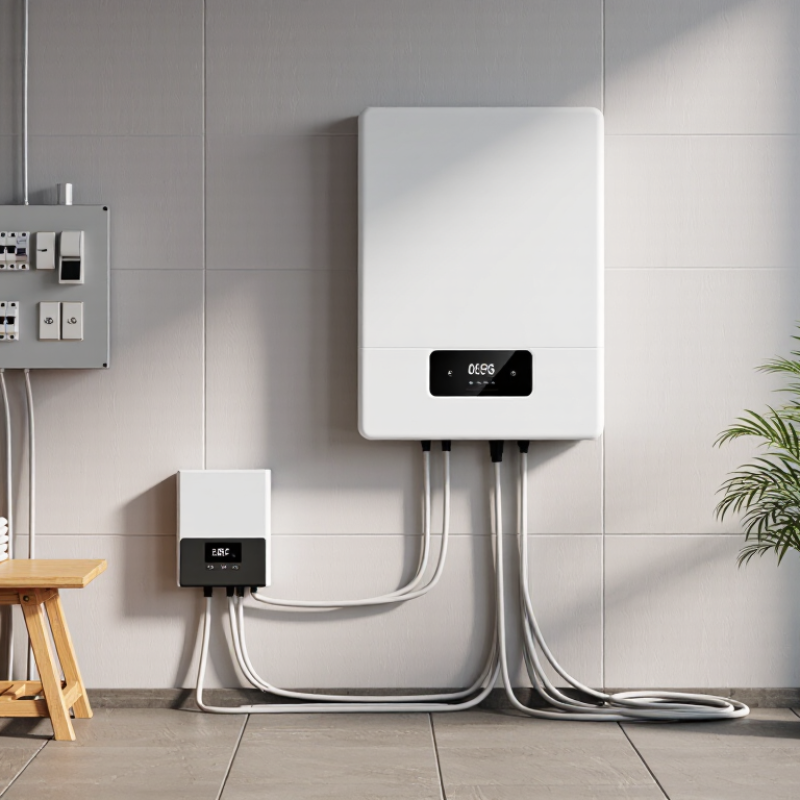
A wall-mounted battery is a stationary, rechargeable system fixed to a wall in a garage or utility area. It stores electricity from rooftop solar panels or, where configured, the grid. During an outage or evening peak, it can supply selected circuits through an inverter. Some systems include the inverter; others need a separate unit. It is not a generator. Its usable capacity, measured in kilowatt-hours, indicates how much energy it holds; power, measured in kilowatts, indicates how many appliances it can run at once.
For a useful benchmark, NREL’s 2024 Annual Technology Baseline models a residential battery system at 5 kW and 12.5 kWh, with 85% round-trip efficiency. That is a research assumption, not a promise about any specific home battery. Real performance depends on temperature, settings, age, and installation. A tidy wall unit may still be undersized for a heat pump or well pump. I would not size one from a monthly bill alone; list the essential loads and their running times.
Tips: Check the wall’s load capacity, clearance, and temperature range before installation. Ask a qualified installer to confirm compatible circuits and backup limits. Keep some charge in reserve if outages are a concern.

2026 Best Wall Mounted Battery for Home Energy Storage?
A wall-mounted home battery stores electricity as chemical energy inside its cells. When solar panels produce more power than the home needs, a compatible system can direct some excess electricity into the battery. It does not store electricity as a simple, ready-to-use current. That distinction matters.
A battery management system monitors cell conditions, while an inverter converts electricity between the battery’s direct current and the alternating current used by household circuits. When solar production falls or the grid goes down, the system may supply selected loads, depending on its design and wiring. A refrigerator, a few lights, and a router can draw power at different rates. Runtime depends on usable capacity, inverter limits, and what remains switched on.
Not magic. Conversion losses mean the energy delivered is usually less than the energy stored. Backup operation also varies: some systems need a separate transfer device, and not every circuit will remain powered. Before choosing a unit, check its usable capacity, continuous output, installation requirements, and compatibility with existing solar equipment. The wall-mounted format can save floor space, but the wall must support the load and allow required clearances. Product diagrams often make installation look neat; real utility rooms may have pipes, heat, or awkward access. Details vary.
Illustrative daily charge and discharge profile for a home battery with 10 kWh of usable capacity.
During sunny hours, excess solar electricity can charge the battery. After sunset, the battery can supply stored electricity to the home. This example is illustrative, not measured product data; actual storage and output depend on the battery, inverter, household demand, and system settings.
A useful comparison starts with usable capacity, not the largest number on the product sheet. A household using a few lights, a refrigerator, and a router during an outage needs a different battery from one running a heat pump. Check both continuous output and surge output; motors may briefly draw much more power when starting. Capacity figures look tidy on paper. Real usage is messier.
For a wall-mounted unit, check its weight, dimensions, and required clearances before choosing a location. The wall must support the equipment, and the installation area should follow the manufacturer’s ventilation and temperature guidance. Ask whether the battery works with your existing inverter or needs a compatible one. Also confirm which circuits can receive backup power. A whole-home claim may depend on additional equipment.
Look beyond warranty length. Compare the stated cycle or energy-throughput limits, and read what the warranty requires for proper use. Safety certifications, battery chemistry, and local installation support matter too. Monitoring can show charge levels and energy flows, but an app cannot fix a poorly sized system. I would compare real household loads before paying extra for features that may rarely be used. Check the details.
A wall-mounted battery should fit the way your household uses electricity, not just its total monthly bill. Check recent bills and note your daily kilowatt-hour use, then identify the circuits you want during an outage. A refrigerator, internet router, lights, and a medical device create a different demand than whole-home heating. Be specific. Write down the appliances and their approximate running times.
Capacity, measured in kilowatt-hours, tells you how much energy a battery stores. Output, measured in kilowatts, tells you how many appliances it can run at once. These figures are not interchangeable. Estimate the energy for your essential loads over the hours you want backup, then allow for conversion losses and any reserve the system keeps. For example, a refrigerator may cycle on and off, so its nameplate rating alone can overstate its daily use. Real life varies.
Solar production, evening routines, and local outages also affect the right size. If panels often leave surplus energy, storage may capture more of it; winter output may be lower. Avoid buying capacity based on a single unusually high-use month. That can lead to an oversized system and unnecessary expense. Check whether the proposed battery can supply your peak load, and confirm wall strength, clearances, and installation requirements with a qualified professional. A modest capacity estimate may still miss future needs. Revisit it if you plan to add an electric vehicle or heat pump.
A suitable battery should match your daily energy use, backup needs, and available wall space. Check its usable capacity, power output, operating temperature range, and compatibility with your inverter. A larger unit is not automatically better. It may cost more and require stronger wall support.
Choose a location that is dry, ventilated, and easy to reach for inspection. Avoid bedrooms, escape routes, direct sunlight, and spots near heat sources. Heat matters. Check the manufacturer’s clearance requirements and confirm the wall can support the battery’s weight. Concrete or properly reinforced framing may be necessary; drywall alone is rarely enough.
Have a qualified electrician assess the wiring, protective devices, and grounding before installation. Local requirements vary, so the installer should verify permits and applicable electrical codes. Keep it dry. Never improvise connections or open the battery enclosure. After mounting, the electrician should test the system, explain its shutdown procedure, and leave clear operating instructions.
No guesswork. One commonly missed detail is future access: pipes, shelves, or stored boxes can make routine checks awkward. Plan for that before drilling.
Headquarters
2980 Scott St, Vista, CA 92081
Phone: (760) 734-4177
Fax: (760) 734-4188
Open: 8:00 am – 4:30 pm
Texas
8051 Jetstar Dr #175 Irving, TX 75063
Phone: (972) 915-6888
Fax: (972) 915-6999
Open: 8:00 am – 4:30 pm
Florida
14231 Jetport Loop. #1 Fort Myers, FL 33913
Phone: (239) 225-4020
Fax: (239) 225-4024
Open: 8:00 am – 4:30 pm