
Choosing a supplier for Tinted Plastic Film involves more than comparing prices. Global buyers need to assess color consistency, film thickness, surface finish, and performance under real operating conditions. A shade that looks uniform on a small sample may appear different across a full production roll. Details matter.
This guide introduces seven manufacturers for buyers comparing product ranges, customization options, and export support. It highlights practical questions to ask before requesting a quotation, including minimum order quantities, sample availability, production lead times, and quality documentation. Buyers should also confirm whether a supplier can meet the specifications required for their application, such as packaging, construction, or decorative use. Requirements can differ by product and destination, so check them directly rather than relying on a general claim.
Ask about color-matching methods and how batches are checked. Request a sample. Inspect it in the lighting and conditions where the film will be used. A clear specification can reduce misunderstandings, though it cannot remove every production variation. That comparison is useful, but never complete. Communication, shipping arrangements, and after-sales support may matter just as much as the film itself. The manufacturers featured here offer a starting point for research, not a substitute for testing samples and verifying current capabilities. Use the list to narrow your options, then speak with suppliers about your project’s actual needs.
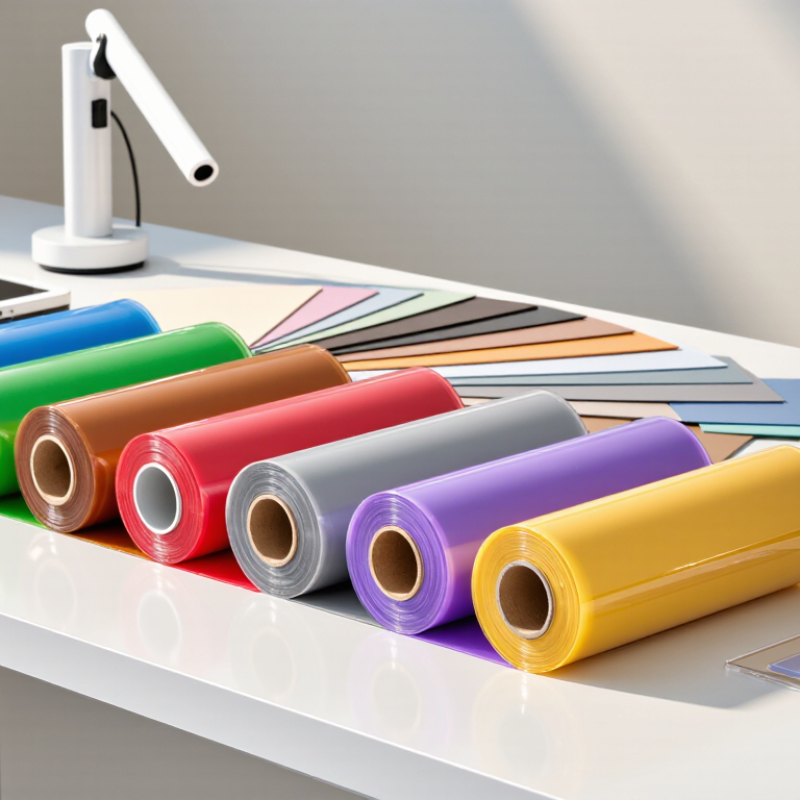
Tinted plastic film is a thin polymer layer, often made from PET, that changes how light passes through a surface. Its color may come from dyes, pigments, or specialized layers, which affect visible light and solar heat in different ways. On building windows, film can reduce glare and limit solar heat entering a room. In vehicles, it can make bright cabins more comfortable. Colored packaging films can also manage light exposure around products. Not all films behave alike.
The need for better building performance is substantial. UNEP and GlobalABC’s 2024/25 Global Status Report for Buildings and Construction reports that buildings and construction accounted for 32% of global energy use and 34% of energy-related CO₂ emissions in 2023. Window film is only one possible measure, not a standalone fix. Buyers should compare tested visible light transmittance and solar heat gain data for the film-window combination. A darker look does not automatically mean stronger heat rejection. That matters. Performance depends on the glass, climate, window direction, and installation quality. A film that suits a sunny west-facing office may make a shaded room feel too dim. Testing samples on the actual glazing is sensible, even if it slows the decision.

Assess suppliers on measured performance, not sample color alone. The IEA’s 2023 buildings-sector analysis attributes about 30% of global final energy use and 26% of energy-related emissions to buildings. This makes verified solar-control performance a meaningful sourcing criterion. Ask for independent test reports covering visible light transmission, solar heat gain, haze, UV rejection, and color consistency. Confirm the test method, sample thickness, and report date; figures without conditions are hard to compare.
Check whether the manufacturer controls coating, slitting, and final inspection, or outsources key stages. Request a recent batch record and compare film thickness, roll width, and shade across several rolls. Review aging and adhesion results, plus packaging details for long-distance shipping. A factory audit can reveal practical issues, such as dusty storage areas or unclear batch labels. Certifications help, but they do not replace product-specific testing.
Tips: Send the same written specification to each supplier, then test matched samples under identical lighting. Ask for a pilot order before committing to volume. Paperwork can look perfect. Verify the details.
Global buyers can find seven useful types of tinted plastic film manufacturers. Some specialize in resin-colored films, where pigment is blended into the polymer. Others use masterbatch to produce consistent shades across larger production runs. A third group offers UV-stabilized films for outdoor applications. Ask for test data, not just a color card.
Packaging-film producers may offer roll widths suited to automated lines. Decorative-film manufacturers often focus on surface appearance, such as translucent colors or matte finishes. Industrial suppliers typically tailor thickness and durability for covers, liners, or equipment protection. The seventh group combines film production with custom slitting, so buyers can order rolls closer to their required dimensions. These profiles overlap, of course. That can make comparisons less tidy.
A practical evaluation starts with a sample roll and a clear specification: resin type, thickness, shade tolerance, width, and intended use. Check whether the supplier can document batch consistency and explain how color may shift under different lighting. For cross-border orders, confirm packaging, lead times, and communication arrangements in writing. A polished sample is useful, but it does not prove every production batch will match. That part deserves a closer look.
This comparison covers seven common tinted-film manufacturing categories rather than naming individual companies. Product availability and specifications vary by supplier; buyers should verify the technical data for each quoted product.
| Manufacturer Category | Common Film Materials | Typical Applications | Key Specifications to Compare | Useful Buyer Checks |
|---|---|---|---|---|
| Automotive window-film manufacturers | Polyester (PET) films, often layered with coatings or laminates | Vehicle glazing, subject to local rules on window tint and visible light transmission | Visible light transmission, solar-energy performance, haze, color stability, adhesive type, and film thickness | Request product data and installation guidance; check applicable vehicle-glazing regulations in the destination market. |
| Architectural window-film manufacturers | Primarily PET films in dyed, coated, or laminated constructions | Commercial and residential glazing for solar control, glare reduction, or appearance changes | Visible light transmission, solar properties, reflectance, UV performance, durability, and compatibility with the glazing | Confirm suitability for the specific glass type and installation conditions; request test data for the selected construction. |
| Decorative-film manufacturers | PVC, PET, and other polymer films, depending on the product and intended use | Interior surfaces, signage, furniture finishes, and privacy or color effects on glass | Color consistency, surface finish, opacity, thickness, adhesive system, and indoor or outdoor suitability | Review physical samples and confirm surface preparation, application method, and removal requirements. |
| Colored packaging-film manufacturers | PE, PP, PET, and multilayer film structures, selected for packaging needs | Flexible packaging, wraps, bags, and printed or colored packaging applications | Film structure, thickness, sealing behavior, print compatibility, barrier needs, and food-contact status where relevant | For food packaging, obtain documentation for the exact material and intended conditions of use in the destination market. |
| Agricultural-film manufacturers | Commonly polyethylene (PE) films with colorants or functional additives | Greenhouse covers, mulch films, and other crop-protection uses | Thickness, light transmission, color, tear resistance, UV stabilization, and expected service conditions | Match the film to local climate and crop requirements; clarify service-life assumptions and disposal options. |
| Safety and security-film manufacturers | Typically multilayer PET constructions designed for glazing applications | Glass-retention and impact-mitigation applications; performance depends on the complete installed system | Film thickness, adhesive, attachment method, tested assembly, optical appearance, and stated performance limits | Ask for test reports covering the relevant film-and-glass assembly; do not treat film alone as a guarantee against breakage. |
| Solar-control and specialty-film manufacturers | PET and other polymer substrates with dyed, coated, or laminated layers | Glazing and specialty applications requiring selected light, heat, or appearance characteristics | Visible light transmission, solar transmission or reflectance, color, haze, coating durability, and substrate compatibility | Compare measured values using consistent test methods and confirm the product is intended for the target application. |
When comparing tinted plastic film manufacturers, look beyond a sample’s color. Ask how each supplier controls shade, thickness, haze, and surface defects across full production runs. A handheld spectrophotometer reading can help, but request the measurement method and acceptable variation in writing. Check sample rolls under daylight and indoor lighting. Small details matter.
Customization is more than choosing a tint. Confirm available resin types, film widths, thickness ranges, surface finishes, and options for UV resistance. Then ask what changes require new tooling or longer setup time. A supplier may offer many choices, yet struggle to repeat a custom shade consistently. That gap can become costly when packaging or display materials need to match.
Supply reliability deserves equal attention. Compare minimum order quantities, typical lead times, production capacity, and packaging methods that protect rolls from moisture or edge damage. Request a production sample, not only a carefully prepared showroom swatch. Review recent quality records where available, and clarify how defects are reported and resolved. No checklist removes every risk. Even a thorough review may miss a seasonal delay or a subtle color shift, so leave time for incoming inspection before using a large shipment.
Choosing a tinted plastic film manufacturer starts with the job the film must do, not the shade chart. For greenhouse covers, ask for data on light transmission, haze, UV resistance, and aging under heat. For packaging or interior panels, check color consistency, forming behavior, surface finish, and compatibility with adhesives or inks. A sample viewed beside a window is useful, but it cannot replace measurements.
Match the supplier’s process to your required thickness, roll width, tint method, and annual volume. Request a technical data sheet, recent batch inspection results, and samples from production rather than a showroom swatch. Confirm whether the manufacturer can control edge quality, winding tension, and color variation across a full roll. These details matter when a line runs at speed. For export markets, compare packaging, lead times, and documentation with your receiving process. Duties and local standards vary; verify them with qualified advisers. Ask how defects are handled and what evidence supports warranty claims. A low quote may hide setup limits. Easy to miss. Even careful testing has gaps: a short trial may not reveal fading after months outdoors. Agree on a pilot run and acceptance criteria before ordering.
How to Match a Manufacturer to Your Application and Market
Compare film specifications against the wavelengths relevant to your application: UV is shown as 280–400 nm, visible light as 380–780 nm, and near-infrared as 780–2,500 nm. These conventional bands are approximate and overlap at their boundaries. Ask manufacturers for spectral-transmission data, and verify applicable local regulations before selecting a film.
Headquarters
2980 Scott St, Vista, CA 92081
Phone: (760) 734-4177
Fax: (760) 734-4188
Open: 8:00 am – 4:30 pm
Texas
8051 Jetstar Dr #175 Irving, TX 75063
Phone: (972) 915-6888
Fax: (972) 915-6999
Open: 8:00 am – 4:30 pm
Florida
14231 Jetport Loop. #1 Fort Myers, FL 33913
Phone: (239) 225-4020
Fax: (239) 225-4024
Open: 8:00 am – 4:30 pm