China has become a major source of Grain FIBC Bags for farms, grain processors, exporters, and storage companies. This guide introduces ten notable Chinese manufacturers and examines what separates a dependable supplier from a low-cost seller. The comparison considers product quality, production capability, customization, export experience, and customer support.
A suitable Grain FIBC Bags manufacturer should understand grain handling in real working conditions. Bags may face forklift movement, warehouse stacking, moisture exposure, dust, and long-distance transport. Practical details matter, including fabric strength, seam consistency, safe working load, filling options, discharge design, and liner compatibility. Clean manufacturing areas and traceable inspection records also deserve attention. They often reveal more than attractive catalogs.
The list is not a permanent verdict. Supplier performance can change with materials, factory management, and order volume. That limitation matters. Buyers should verify samples, test reports, certifications, factory information, and recent customer references before placing large orders. Price alone is a weak measure. A cheaper bag may create handling problems, grain loss, or delayed shipments. This article uses a balanced evaluation approach, combining visible product evidence with procurement factors that experienced buyers regularly examine. Some manufacturers may excel in customization, while others may offer stronger production scale or communication. The right choice depends on grain type, packaging weight, storage conditions, and destination requirements. Careful comparison remains essential.
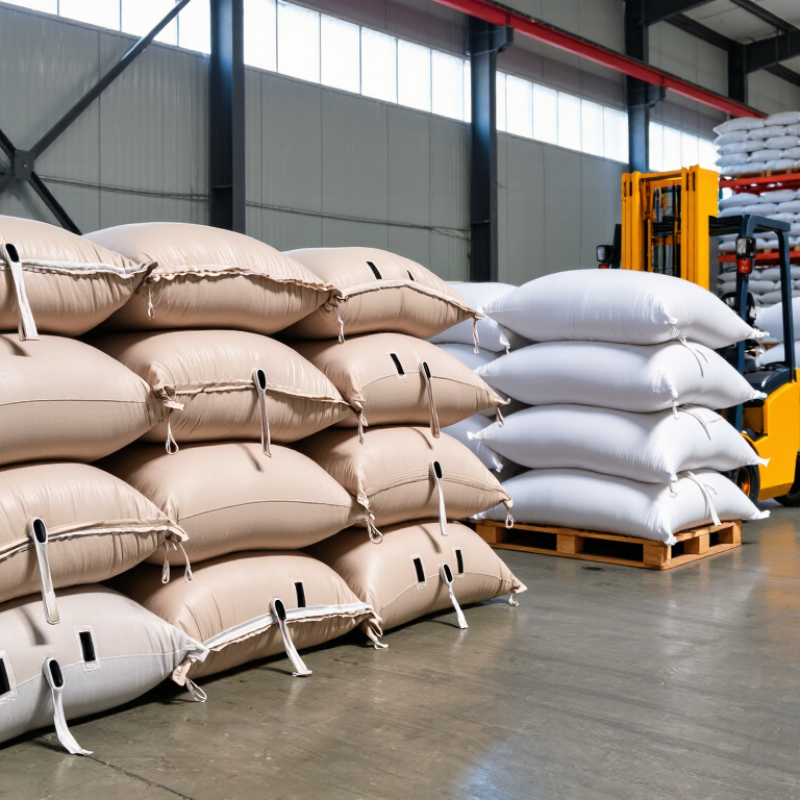
Grain FIBC bags are flexible intermediate bulk containers designed for storing and moving dry agricultural materials. They are usually made from woven polypropylene, with strong lifting loops and a reinforced body. A standard bag may hold 500 to 2,000 kilograms of grain, depending on its design. These bags can carry wheat, rice, corn, barley, and animal feed. The inner surface should remain clean and dry. Small details matter. Grain dust can collect in seams, corners, and discharge outlets if cleaning is neglected.
Farmers, grain traders, mills, and food-processing facilities use FIBC bags during harvesting, storage, and transportation. Their square shape helps warehouses use vertical space more efficiently. Forklifts can move several filled bags with less manual handling. Some designs include coated fabric, liners, filling spouts, or bottom discharge openings. These features may reduce moisture exposure and make unloading more controlled. However, a bag is not a substitute for proper warehouse ventilation. Condensation can still damage grain inside a sealed container.
When comparing China’s top ten grain FIBC bag manufacturers, buyers should examine fabric strength, stitching quality, safe working load, and production consistency. Test reports and traceable quality records are valuable. Samples should be checked with real grain, not only reviewed through photographs. No bag is perfect. A slightly stronger design may cost more, while a cheaper one may fail under repeated handling. Selection should reflect the grain type, storage period, filling method, and local transport conditions.
| Rank | Anonymous Supplier Profile | Typical Production Region | Common FIBC Construction | Typical Safe Working Load | Safety Factor | Grain-Contact Materials | Filling & Discharge Options | Relevant Standards or Controls | Typical Grain Applications |
|---|---|---|---|---|---|---|---|---|---|
| 1 | Anonymous large-scale woven-packaging supplier | Eastern China | 4-panel or U-panel FIBC with coated polypropylene fabric | 500–2,000 kg | 5:1 or 6:1, depending on design | Food-contact polypropylene; optional polyethylene liner | Top filling spout; bottom discharge spout; tie closure | ISO 21898 design practice; batch inspection; seam-strength testing | Wheat, maize, rice, barley, and soybean storage |
| 2 | Anonymous export-oriented FIBC supplier | Central China | Circular woven polypropylene body with sift-proof seams | 500–1,500 kg | 5:1 for single-trip applications | Untreated or coated PP; optional food-grade PE liner | Duffel top; flat bottom or spout bottom | Food-contact documentation requested by destination market | Rice, feed grain, corn, oats, and flour-milling inputs |
| 3 | Anonymous custom-specification supplier | Northern China | Baffle FIBC designed for improved pallet stability and cubic efficiency | 1,000–2,000 kg | 5:1 or 6:1 after testing | Woven PP with optional PE or PP liner | Top inlet; iris or conical outlet; liner drawstrings | Dimensional inspection; lifting-loop and drop testing | Bulk rice, wheat, pulses, seed, and animal-feed ingredients |
| 4 | Anonymous liner-integrated FIBC supplier | Southern China | Standard four-loop bag with fitted polyethylene liner | 500–1,500 kg | 5:1 for one-way transport | Food-grade PP and low-density PE liner options | Open or duffel top; discharge spout with cover | Liner leak checks; cleanliness inspection; traceable batch records | Grains requiring protection from moisture, dust, or cross-contamination |
| 5 | Anonymous agricultural-packaging supplier | Northwestern China | U-panel FIBC with UV-stabilized polypropylene fabric | 500–1,500 kg | 5:1, subject to handling conditions | UV-treated PP; optional inner liner | Top inlet; full-bottom discharge or standard outlet | UV-resistance assessment; fabric denier and tensile-strength checks | Seasonal grain handling and short-term warehouse storage |
| 6 | Anonymous high-throughput packaging supplier | Eastern coastal China | 4-loop FIBC compatible with automated filling lines | 1,000–2,000 kg | 5:1 or 6:1 | Clean woven PP; PE liner available for fine particles | Standard filling spout; controlled-flow discharge spout | Loop load testing; filling-line compatibility checks | Large-volume milling, processing, and distribution operations |
| 7 | Anonymous clean-room controlled supplier | Eastern China | Low-contamination FIBC with controlled sewing and packing areas | 500–1,500 kg | 5:1 | Food-contact PP; sealed PE liner where required | Closed top; bottom spout with protective cover | Hygiene procedures; foreign-matter control; visual cleanliness checks | Milled rice, cereal ingredients, seed, and premium food grains |
| 8 | Anonymous logistics-focused supplier | Central-eastern China | Stable four-loop FIBC optimized for palletized transport | 500–1,500 kg | 5:1 for single-trip distribution | Coated or uncoated PP; optional anti-slip treatment | Duffel top; flat bottom; discharge flap | Pallet stability checks; transport abrasion inspection | Domestic and export movement of grain and feed materials |
| 9 | Anonymous reusable-FIBC supplier | Southern-central China | Heavy-duty woven PP FIBC designed for approved repeated handling | 1,000–2,000 kg | 6:1 when qualified for reuse | Heavy-duty PP; replaceable or integrated liner options | Top filling spout; bottom discharge with safety tie | Periodic inspection required before reuse; documented cleaning controls | Closed-loop grain logistics where cleaning and inspection are controlled |
| 10 | Anonymous flexible-packaging supplier | Southwestern China | Cost-efficient standard FIBC for general dry-bulk handling | 500–1,500 kg | 5:1 | Woven polypropylene with optional inner liner | Open top or duffel top; standard bottom outlet | Basic dimensional, visual, seam, and load-bearing inspections | General grain transport, storage, and agricultural processing |
| Grain FIBC bags are flexible intermediate bulk containers, usually manufactured from woven polypropylene and designed to hold dry bulk products. Actual safe working load, food-contact suitability, liner selection, reuse status, and certification must be confirmed from the supplier's current technical documentation and the regulations of the destination market. | |||||||||