
Choosing among China’s top brush cutter manufacturers takes more than comparing prices or polished product photos. Global buyers need to understand how a machine performs in real working conditions: on uneven ground, around fence posts, and through thick grass. A reliable supplier should explain engine or battery options, cutting attachments, safety features, and maintenance needs in clear terms. Small details matter. A comfortable handle and accessible air filter can make long workdays easier.
This guide introduces key factors for evaluating a Brusher Cutter manufacturer in China, including product range, quality controls, production capacity, spare-parts support, and communication. Ask how samples are tested and whether replacement parts can be sourced over time. Review technical specifications carefully, and request documents relevant to your market rather than relying on broad assurances. Certifications can help, but they do not replace practical checks or clear service arrangements. No single factory will suit every buyer. Some may prioritize competitive pricing, while others offer stronger customization or export support. The trade-off is not always obvious at first. Even experienced buyers can overlook small differences in packaging, lead times, or after-sales response. Use the sections ahead to compare suppliers with specific questions, verify claims where possible, and choose equipment suited to the work it must actually do.
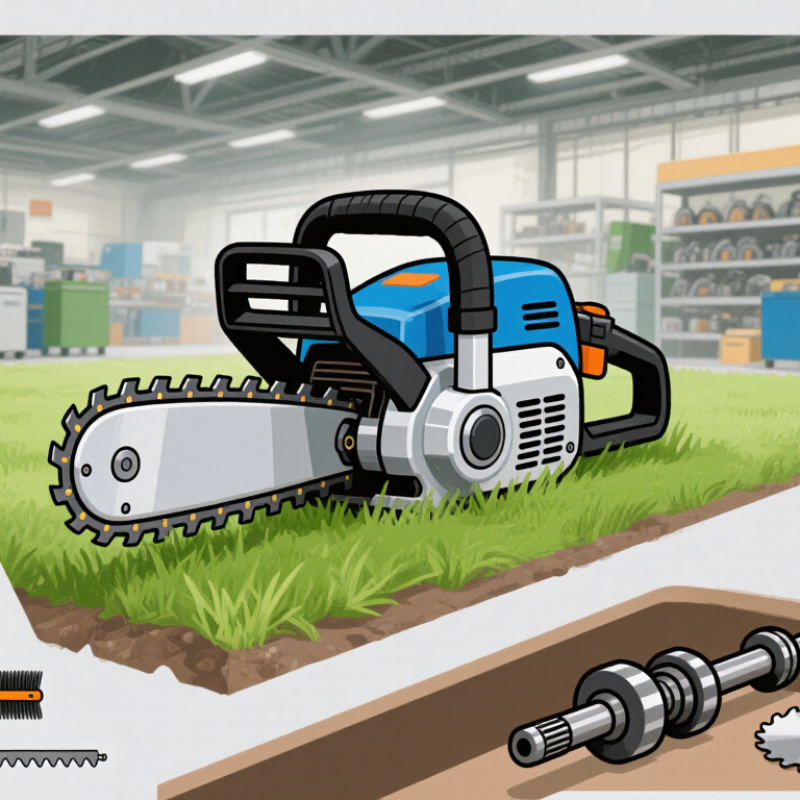
Brush cutters in the 25–50 cm³ range suit different workloads, but engine size alone does not determine performance. A 25 cm³ model may handle grass and light weeds around garden edges. Dense growth and longer sessions can call for more displacement, provided the operator can manage the added weight and vibration. Check the stated power, shaft design, harness, and maintenance access, not just the engine figure. Small details matter.
Cutting widths commonly fall between 230 and 450 mm. A wider blade can clear more ground per pass, yet it may feel less controlled among stones, tree trunks, or narrow paths. The actual width depends on the fitted blade or cutting head, so compare specifications using the same attachment type. Ask manufacturers for clear test conditions and compatible-tool details. Those figures are useful, but they do not tell the whole story; I would also want to know how the machine feels after an hour of work.

A brush cutter converts engine power into rotation at the cutting head. Two-stroke engines are generally lighter and compact, while four-stroke engines run on a separate fuel-and-oil system and may feel steadier during longer jobs. Actual weight, starting effort, and fuel use vary by design. Check the machine’s rated power and operating instructions, not just its engine label. Small details matter.
The drive shaft carries rotation from the engine to the attachment. A straight shaft often offers better reach beneath shrubs, while a curved shaft can feel manageable around small, open areas. Shaft construction and vibration control affect comfort over a full workday. A poorly matched harness can still make a balanced machine tiring. This is easy to overlook.
Cutting attachments suit different vegetation. Nylon line handles grass and soft edges; a metal blade can tackle tougher weeds when the machine is designed for it. Match the attachment to the cutter’s specifications, and inspect the guard, fasteners, and cutting head before use. In practical work, wet stems may wrap around the head, slowing progress. No setup is perfect. Buyers comparing manufacturers should ask for clear compatibility charts, maintenance guidance, and test data for the intended workload. A neat specification sheet does not always reveal how a tool feels after an hour in the field.
| System or Component | Common Types | How It Works | Typical Characteristics | Buyer Considerations |
|---|---|---|---|---|
| Two-stroke petrol engine | Air-cooled, single-cylinder engine | A fuel-and-oil mixture is burned in the cylinder. The engine’s crankshaft transfers rotation through the drive shaft to the cutting head or blade. | Portable and commonly used for demanding vegetation work. Many handheld models fall in the approximate 25–50 cc displacement range; fuel-mixing requirements vary by engine design. | Check the specified fuel-to-oil ratio, emissions requirements in the destination market, starting system, service access, and noise level. |
| Four-stroke petrol engine | Air-cooled, single-cylinder engine with separate engine oil | Intake, compression, power, and exhaust occur in four piston strokes. Engine oil is generally stored separately from the fuel. | Often selected where separate fuel and oil systems are preferred. Engine weight, maintenance needs, and operating characteristics vary by model. | Confirm oil-change intervals, required fuel grade, allowable operating angles, weight, and whether the intended cutting attachment is approved. |
| Battery-electric motor | Rechargeable battery-powered motor, commonly using a removable lithium-ion battery | Electrical energy drives a motor connected to the cutting assembly, either directly or through a transmission. | No exhaust emissions at the point of use and generally lower operating noise than petrol machines. Runtime depends on battery capacity, workload, and attachment. | Compare battery voltage and capacity in amp-hours or watt-hours, charging time, replacement-battery availability, and rated cutting performance. |
| Drive shaft and tube | Rigid straight shaft; flexible or curved-shaft designs | The rotating shaft carries torque from the engine or motor to the gearbox and cutting attachment. A straight shaft commonly uses a rigid shaft and bevel gearbox at the head. | Straight-shaft configurations are common on heavier-duty brush cutters. Flexible and curved designs are typically suited to compatible, lighter-duty applications. | Check shaft length and diameter, spline or coupling dimensions, gearbox compatibility, and whether the complete drive assembly is rated for the intended attachment. |
| Nylon line head | Bump-feed, manual-feed, or fixed-line head | Rotating nylon line cuts grass and soft weeds through impact. On a bump-feed head, tapping the head on the ground advances line from the spool. | Useful around obstacles and for lawn edges. Cutting swath is model-dependent; many heads are designed for a swath of roughly 300–450 mm. | Verify line diameter, head mounting thread, approved line type, guard coverage, and the machine’s maximum permitted cutting width. |
| Metal grass blade | Two-, three-, or multi-tooth steel blade | The rotating blade cuts dense grass and some woody weeds with its sharpened or shaped edges. | Blade diameter is commonly around 230–255 mm on many handheld machines, though permitted sizes differ by model and region. | Use only a blade specified for the machine. Confirm mounting hardware, rotation direction, guard type, and required operator protection. |
| Saw blade | Circular toothed blade for suitable brush-cutting machines | Teeth cut woody stems as the blade rotates. This attachment requires a compatible machine, approved guard, and correct mounting setup. | Designed for certain woody vegetation rather than routine lawn trimming. Cutting capacity depends on blade design, machine power, and material. | Check the manufacturer’s allowed blade diameter and tooth configuration, operator training requirements, and local safety regulations. |
| Power transmission and gearbox | Clutch, drive shaft, and right-angle bevel gearbox | The clutch couples engine output to the rotating shaft when operating speed is reached. A bevel gearbox changes the direction of rotation at the cutting head. | Gearbox ratios, lubrication requirements, and permitted operating speeds vary. The attachment must remain within the machine’s rated operating limits. | Ask for gearbox lubrication instructions, service intervals, compatible attachment specifications, and replacement-part availability. |
| Operator controls and harness | Throttle and stop controls; shoulder strap or double-shoulder harness | Controls regulate or stop the power unit, while the harness supports the machine and helps distribute its weight during use. | Harness style and adjustment affect comfort and control, especially during extended work. A suitable guard helps contain debris from the cutting area. | Assess control placement, emergency stop access, harness adjustability, included guards, and compatibility with the selected cutting attachment. |
Note: Figures and configuration descriptions are typical examples, not universal specifications. Actual displacement, cutting width, blade size, attachment compatibility, and maintenance requirements vary by model. Always follow the equipment manual and applicable workplace safety rules.
China’s brush cutter manufacturers differ in customization, production capacity, and export support. Compare OEM services beyond logo printing. Ask whether suppliers can adjust handle styles, shaft lengths, packaging, and spare-parts kits. Details matter. Confirm minimum order quantities, sample charges, lead times, and how design changes affect pricing. A clear specification sheet makes quotations easier to compare.
Certification claims need careful checking. Request documents for the exact model, including the issuing body, test scope, and validity dates. Ask whether reports cover the engine, noise, emissions, or electrical components where relevant to your target market. Ask for evidence. A certificate for one model may not cover an entire product range. Verify documents independently when possible.
Product ranges may include different engine displacements, straight or curved shafts, harness options, and cutting attachments. Check which parts are included, and whether replacement heads, guards, and air filters remain available. Request a sample for inspection and practical testing in the vegetation your customers typically manage. A polished catalog can still hide uneven finishing or difficult assembly. That risk is real. Compare the sample with the written specification, and record any differences before approving a bulk order.
Safety and Quality Benchmarks: ISO 11806-1 and Key Product Specifications
For global buyers comparing brush cutter manufacturers in China, safety evidence matters as much as cutting power. ISO 11806-1 sets safety requirements and verification methods for hand-held brush cutters and grass trimmers with integral combustion engines. Ask suppliers for test reports that identify the model and standard edition. A certificate alone may not show which configuration was assessed.
Inspect the physical details. The cutting attachment should match the machine’s rated speed, and the guard should cover the specified cutting area. Check for a functioning throttle lock, clear controls, and a suitable harness. Compare engine displacement, rated power, dry weight, shaft design, and permitted attachment types. Noise and vibration figures also matter; request the test conditions, since numbers can be hard to compare otherwise. A listed weight may exclude the harness or cutting head. That small detail can change how the machine feels after an hour in the field.
Tips: Ask for a sample or production-unit inspection. Check that the manual, warning labels, and supplied guard match the exact model. If documentation seems vague, pause and verify it. Specification sheets are useful, but they do not replace hands-on checks.
Global buyers should match brush-cutter power to the vegetation, not just the advertised cutting width. FAO’s Global Forest Resources Assessment 2020 estimates that forests cover 4.06 billion hectares, or 31% of the world’s land area. Conditions vary widely, so a tool suited to light grass may struggle with woody growth. Check rated power, compatible cutting attachments, and the maker’s stated limits for stem thickness. More power is not automatically better.
Cutting width affects both pace and control. A wider head can cover open ground faster, but it may feel awkward around fence posts, trunks, and narrow paths. For mixed sites, compare the included head and blade options, then check whether replacements are easy to obtain. Small details matter: a loose harness fit or hard-to-find guard can slow a crew down. There is no perfect width.
Support belongs on the checklist too. Ask about spare-part availability, service procedures, and clear operating instructions before placing an order. Vibration deserves attention: European Directive 2002/44/EC sets a daily hand-arm vibration exposure action value of 2.5 m/s² A(8). Compare declared vibration figures and planned work duration; a low purchase price cannot fix poor fit or long service delays. I would still verify the specifications for the exact configuration, since attachments can change how a machine handles.
Headquarters
2980 Scott St, Vista, CA 92081
Phone: (760) 734-4177
Fax: (760) 734-4188
Open: 8:00 am – 4:30 pm
Texas
8051 Jetstar Dr #175 Irving, TX 75063
Phone: (972) 915-6888
Fax: (972) 915-6999
Open: 8:00 am – 4:30 pm
Florida
14231 Jetport Loop. #1 Fort Myers, FL 33913
Phone: (239) 225-4020
Fax: (239) 225-4024
Open: 8:00 am – 4:30 pm