
White Offset Paper is a familiar choice for books, forms, manuals, and other printed materials that need clear text and an uncoated finish. Its surface absorbs ink differently from coated paper, which can affect sharpness, color, and drying time. Small details matter. A printer may notice the difference in fine type, solid areas, or pages that must be written on after printing.
Choosing a manufacturer takes more than comparing a price list. Buyers often review basis weight, brightness, opacity, sheet consistency, available sizes, packaging, and delivery reliability. Samples can help confirm how a grade performs on a specific press. This guide to China’s top 10 White Offset Paper manufacturers offers a starting point for that comparison. It considers product range, production capabilities, quality controls, and service information that buyers can verify directly. These factors do not tell the whole story. A supplier suited to a large book run may not be the best fit for a small, frequent order. Rankings can also change with market conditions and buyer priorities. Treat this overview as a practical shortlist, then request current specifications and test the paper before making a final decision.
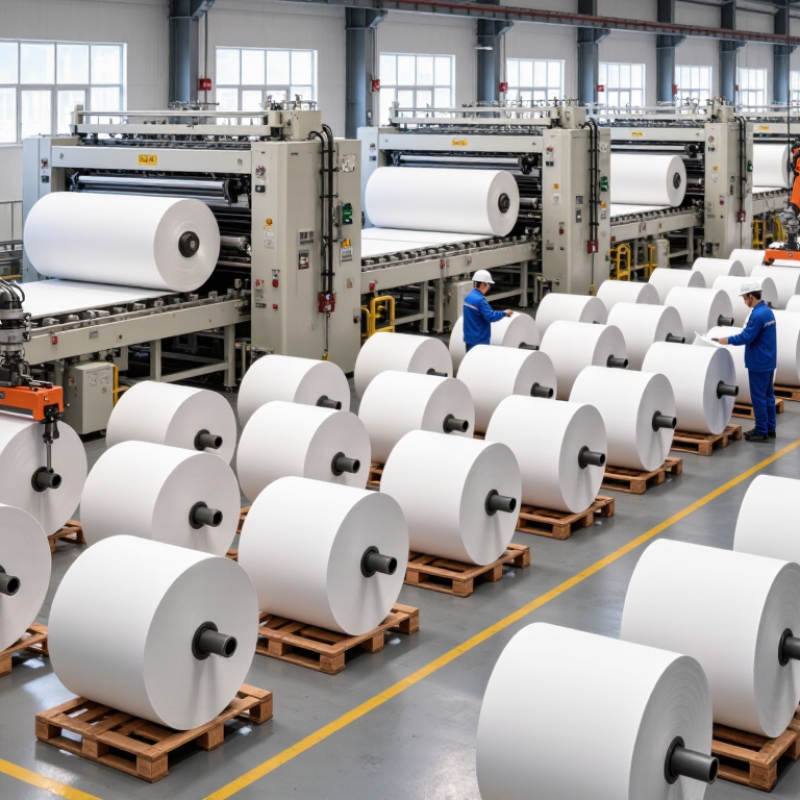
White offset paper is an uncoated sheet designed for clear, practical printing. Its lightly textured surface absorbs ink, making it suitable for text-heavy pages and everyday writing. Common uses include books, school materials, forms, notebooks, office documents, and instruction leaflets. It is available in different weights, so a thin sheet may suit an interior page while heavier stock feels sturdier in a booklet. A white surface helps contrast, but brightness alone does not guarantee sharp printing. Opacity, ink choice, and press settings matter too.
The scale of paper use gives this material wider context. FAO’s 2022 forest-products data puts global paper and paperboard production at about 401 million tonnes. That figure covers many paper grades, not offset paper alone. In Europe, CEPI reported a paper recycling rate of 70.5% for 2022, reflecting the region’s broader paper cycle. Still, collection and recycling depend on local systems and paper condition. For a real print job, check samples under the intended lighting and test how text appears on both sides. A small trial can reveal show-through or smudging before a full run. It is easy to overlook that step.

White offset paper is made by blending cellulose fibres with water, then refining the pulp to improve fibre bonding. The dilute mixture flows onto a moving screen, where water drains and fibres form a thin web. Pressing removes more water; heated cylinders dry the sheet. Surface sizing and calendering then help control ink absorption and smoothness. Small variations in fibre mix or drying can change the finished sheet.
The scale is substantial: FAO’s Yearbook of Forest Products 2022 reports about 401 million tonnes of global paper and paperboard production. That figure covers many grades, not white offset alone. Evaluation therefore needs grade-specific checks. ISO 536 measures grammage, while ISO 2470-1 specifies diffuse blue reflectance, commonly used to assess brightness. Tensile strength and surface smoothness also affect press handling and printed detail. A bright sheet is not automatically a better sheet. Too much emphasis on whiteness can overlook opacity, ink holdout, or runnability. A practical inspection includes measuring samples across the roll, not just admiring one clean sheet under office lighting.
China’s white offset paper manufacturing industry supports books, forms, instruction sheets, and other printed materials. The paper is usually uncoated, so its surface must balance ink absorption with clean image reproduction. Mills adjust pulp blends, refining, sizing, and moisture to meet different grade requirements. Small variations matter. They can affect feeding, print sharpness, and how a sheet handles on press.
Quality checks may include basis weight, brightness, opacity, moisture, and surface strength. These measurements help buyers compare grades, but numbers alone cannot predict performance in every print shop. A sample may look even under office lighting yet behave differently during a long press run. Checking samples on the intended equipment is practical. It also takes time, and not every buyer can do it.
Across China, manufacturers compete through process consistency, product range, delivery reliability, and production efficiency. Modern controls can reduce variation, while improvements in water and energy use remain important areas of work. Buyers should consider both unit price and the paper’s performance in their own workflow. The industry still has room to improve; that is worth acknowledging.
China’s leading white offset paper manufacturers are best compared by product consistency, not headline capacity alone. The China Paper Association’s 2023 annual report records national paper and paperboard output of 129.65 million tonnes, against consumption of 131.65 million tonnes. These figures cover the whole sector, not white offset grades. That distinction matters.
The ten profiles should help buyers examine mill capabilities: basis-weight options, whiteness, opacity, surface sizing, and sheet flatness. A clean, even sheet can feed smoothly through an office press; uneven sizing may cause ink to feather. Paper feel matters.
Check technical data sheets, then test samples on the intended printing equipment. The profiles can also compare fiber sourcing, quality controls, and export experience, while separating verified specifications from sales claims. Public mill-level data is uneven, so a strict ranking may overstate certainty. That is worth questioning.
For procurement, record batch consistency, packaging protection, and delivery lead times alongside price. These practical details often reveal more than a broad capacity figure.
Comparing the top 10 white offset paper manufacturers takes more than checking price lists. Start with the paper’s intended use and compare like-for-like grades. Review grammage, brightness, opacity, caliper, and moisture consistency. These affect ink appearance, show-through, sheet feeding, and finished-paper feel. Request recent technical data and physical samples, then inspect them under consistent lighting. A bright sample alone proves little. Ask how quality is monitored between production batches.
Capacity matters when your schedule is tight. Compare stated monthly output with available stock, minimum order quantities, and realistic lead times. Ask whether the manufacturer can maintain the same grade across repeat orders. A strong service team should provide clear answers about specifications, packaging, shipment tracking, and complaint handling. Test this before committing: send a specific question and note how quickly, and how precisely, it is answered. Some buyers focus too heavily on mill capacity; I have found delivery planning can be the weaker link.
Tips: Keep a simple comparison sheet. Record sample results, quoted lead times, and response quality. Ask for evidence. Small details matter. If a specification is unclear, pause and verify it rather than assuming all “white offset” papers perform alike.
Headquarters
2980 Scott St, Vista, CA 92081
Phone: (760) 734-4177
Fax: (760) 734-4188
Open: 8:00 am – 4:30 pm
Texas
8051 Jetstar Dr #175 Irving, TX 75063
Phone: (972) 915-6888
Fax: (972) 915-6999
Open: 8:00 am – 4:30 pm
Florida
14231 Jetport Loop. #1 Fort Myers, FL 33913
Phone: (239) 225-4020
Fax: (239) 225-4024
Open: 8:00 am – 4:30 pm