
Why Choose Paper Salad Bowls for Your Business?

A busy lunch service tests every container. Bowls are stacked, filled quickly, carried across the counter, and sometimes delivered several miles away. A Paper Salad bowl can offer a practical way to serve greens, grains, and toppings while presenting them in a clean, natural-looking package. For a café or catering team, the choice affects more than appearance. It can influence portion presentation, storage space, staff workflow, and the customer’s experience.

The right option depends on your menu and service conditions. A crisp garden salad may need less protection than one topped with warm ingredients or a generous amount of dressing. Check bowl capacity, rim strength, lid fit, and how the material performs during your usual holding and delivery times. Ask suppliers for clear product specifications and confirm that the bowl is intended for food contact. Claims about compostability or recyclability also deserve a closer look; local facilities may not accept every product. Small details matter.

Cost is part of the decision, but the cheapest unit is not always the best value if it slows packing or arrives damaged. Test a few sizes with real menu items before placing a large order. I would not assume one bowl suits every dish; that is an easy mistake to make. This guide explores the practical benefits, selection criteria, and trade-offs businesses should consider when choosing paper salad bowls.
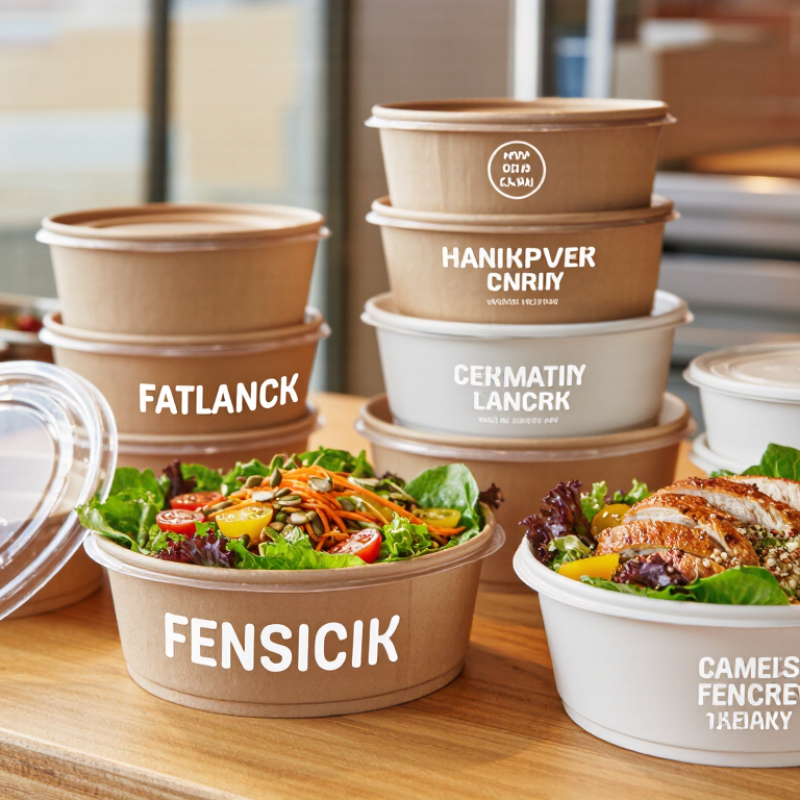
Why Choose Paper Salad Bowls for Your Business?

What Paper Salad Bowls Are and How They Are Made

Paper salad bowls are usually made from paperboard, a thicker, stiffer form of paper fiber. Manufacturers blend fibers with water, form them into sheets, then press and dry the material. The board is cut into bowl-shaped blanks and formed with heat and pressure. A curled rim adds stiffness and gives the bowl a smoother edge. Many bowls also use a thin lining to resist moisture and dressing. Its material may be plastic-based or another barrier, so the word “paper” alone does not describe the whole product.

The U.S. Environmental Protection Agency’s 2018 Advancing Sustainable Materials Management report estimates that 46 million tons of paper and paperboard were recycled, out of 67.4 million tons generated. That 68.2% rate covers a broad material category, not salad bowls specifically. That distinction is easy to miss. For a business, ask suppliers what the bowl’s barrier is made from, and whether local facilities accept that specific construction. A bowl can feel sturdy in the hand yet soften under warm grains or a heavy vinaigrette. Testing it with an actual menu portion is more useful than relying on a product description alone.

Why Choose Paper Salad Bowls for Your Business? - What Paper Salad Bowls Are and How They Are Made

Topic Typical details Business consideration
What they are Bowls formed from paperboard, often with a barrier lining on the inside. Suitable for serving salads and other foods when the bowl’s intended use and food-contact requirements are met.
Main material Paperboard is commonly made from virgin fiber, recycled fiber, or a blend. Construction varies by product. Check material specifications and food-contact documentation rather than assuming all paper bowls are alike.
Barrier lining A thin lining, such as polyethylene or a plant-based polymer, may help resist moisture and grease. Some products use other barrier treatments. Confirm compatibility with dressings, oily foods, serving time, and any heating requirements.
How they are made Paperboard is printed or left unprinted, cut into blanks, shaped into a bowl, and joined at the side and base. The rim is typically rolled or formed for stiffness. Manufacturing details can affect rigidity, leak resistance, stackability, and the bowl’s usable volume.
Moisture performance Performance depends on the board, lining, seams, and exposure time. A paper bowl is not automatically leakproof for every food or duration. Test samples with the menu’s actual ingredients, especially wet salads, sauces, and oily dressings.
Size and shape Available capacities, rim diameters, and bowl depths vary by supplier and product design. Lids, when offered, must match the bowl’s rim. Choose a size based on serving portions and verify lid fit before ordering in volume.
End of life Recycling or composting suitability depends on the lining, food residue, local collection rules, and available processing facilities. Check local waste guidance and product-specific certifications; do not assume a coated bowl is recyclable or compostable everywhere.
Why businesses choose them They are lightweight, stackable, and available in a range of formats, with options for printed or plain designs. Compare fit for the menu, storage needs, serving performance, total cost, and disposal options.

Key Features of Paper Salad Bowls for Food Service

Paper salad bowls must handle more than leafy greens. Dressings, cut tomatoes, and warm grains can soften weak walls or seep through seams. A firm rolled rim helps during filling and carrying, while a broad base keeps bowls steadier on crowded counters. Stackable shapes also save storage space during busy service. Fit matters.

For food-service teams, capacity and barrier performance deserve a practical test. Fill a sample bowl with a dressed salad, leave it for 20 minutes, then lift it by the rim. Check for sagging, oil marks, and leaks. The test is simple, but it can reveal problems a product sheet misses. Some bowls use moisture-resistant coatings; these may affect recycling or composting options, so verify local facility requirements rather than relying on a general claim.

The U.S. EPA’s 2018 Advancing Sustainable Materials Management report estimated that 80.9% of paper and paperboard containers and packaging were recycled nationally. This broad category does not describe salad bowls alone. Still, it shows why fiber packaging can be relevant to waste planning. A bowl’s actual end-of-life route depends on its coating, food residue, and local collection system. That part is less tidy.

Business Benefits of Choosing Paper Salad Bowls

Paper salad bowls can help a food business serve fresh meals in a practical, tidy format. Their wide openings make layered greens, grains, and toppings easy to see and reach. That matters at a busy lunch counter. Staff can fill bowls quickly, while customers can carry them without balancing a narrow container. Many designs also stack neatly, saving shelf space during a crowded prep shift.

The business benefits depend on choosing the right bowl, not just choosing paper. A sturdy rim and suitable lining can help the container hold dressing and moist ingredients, but performance varies by construction and serving time. Test it with your actual menu. Leave a dressed salad inside for a few minutes and check for softening or seepage. Not every bowl works. Paper packaging may also support a business’s waste-reduction goals, though disposal options differ by local facilities and the bowl’s materials. Be clear with customers about what can be recycled or composted. A small detail can prevent confusion. The trade-off is real: paper bowls may cost more than some alternatives, so compare durability, storage, and portion size before switching.

Common Uses Across Restaurants and Catering Services

Restaurants use paper salad bowls for dine-in service, takeout, and quick lunch counters. A sturdy bowl can hold leafy greens, grains, roasted vegetables, and protein without feeling awkward to carry. For dressing-heavy salads, test the bowl with a real serving before ordering in bulk. Moisture resistance and lid fit can vary, even between similar-looking products. A poor fit is easy to notice during a busy shift.

Catering teams use these bowls for boxed lunches, conference meals, outdoor events, and self-serve salad stations. Their stackable shape can save space in a prep area, while individual portions make distribution simpler. For a buffet, wider bowls help guests see the ingredients and serve themselves neatly. Still, paper bowls are not perfect for every menu. Hot, wet foods may soften them over time, so match the bowl to the food and expected serving duration.

Tips: Test a filled bowl with dressing and its intended lid. Check that staff can stack and carry it comfortably. Choose a size that leaves room for toppings, but does not make portions look sparse. Ask about disposal options too; local facilities may not accept every paper product.

Factors to Consider When Selecting Paper Salad Bowls

Why Choose Paper Salad Bowls for Your Business?

Factors to Consider When Selecting Paper Salad Bowls

Choosing paper salad bowls starts with the food you serve, not the bowl’s appearance. A grain bowl with roasted vegetables needs more depth than a side salad. Check capacity, rim width, and whether toppings stay below the rim during delivery. A snug lid matters if bowls travel in bags or sit on a counter. Stack a few samples to see whether they wobble or use too much storage space.

Paper construction also affects performance. Compare bowl stiffness and resistance to dressing, oil, and condensation. A leafy salad may work well in a lighter bowl, while warm grains can soften some formats. Ask for product specifications, including lining details and recommended uses. Then test a filled sample for the time orders typically spend waiting or in transit. Check for leaks around the base and lid, not just the sidewalls. This step can feel tedious, but one messy delivery can outweigh small unit savings.

Tips: Test bowls with your actual dressing and portion size. Chill one, carry one, and stack one. If a sample works only when handled gently, reconsider it.

Shopping cart