
Pipe connections depend on accurate, repeatable end preparation. A square cut with a clean, consistent bevel helps reduce fit-up problems before welding. Yet choosing a Pipe end Chamfering Machine is not simply a matter of selecting the fastest model. Pipe diameter, wall thickness, material, bevel geometry, production volume, and operator skill all affect the right choice.
Industry data provides useful context, but it needs careful interpretation. Grand View Research’s Steel Pipes Market report valued the global market at USD 96.1 billion in 2022 and forecast continued growth through 2030. The World Steel Association reported 1,888.2 million tonnes of crude steel production in 2023 in World Steel in Figures 2024. These figures indicate the scale of steel-related activity; they do not directly measure demand for chamfering machines. That distinction matters.
Look closely at the actual workpiece. A machine that handles thin stainless-steel tubing may not suit thick-wall carbon-steel pipe. Check its clamping range, cutting method, bevel-angle adjustment, tool-change time, and chip removal. For welding preparation, compare the required end profile with applicable engineering specifications, such as ASME B16.25, where relevant. Ask suppliers for a demonstration using your own pipe samples. Measure the finished bevel, inspect for burrs, and record cycle time. Small details count. Catalog specifications can look reassuring, but real production conditions are less tidy. A careful trial is often the best evidence.
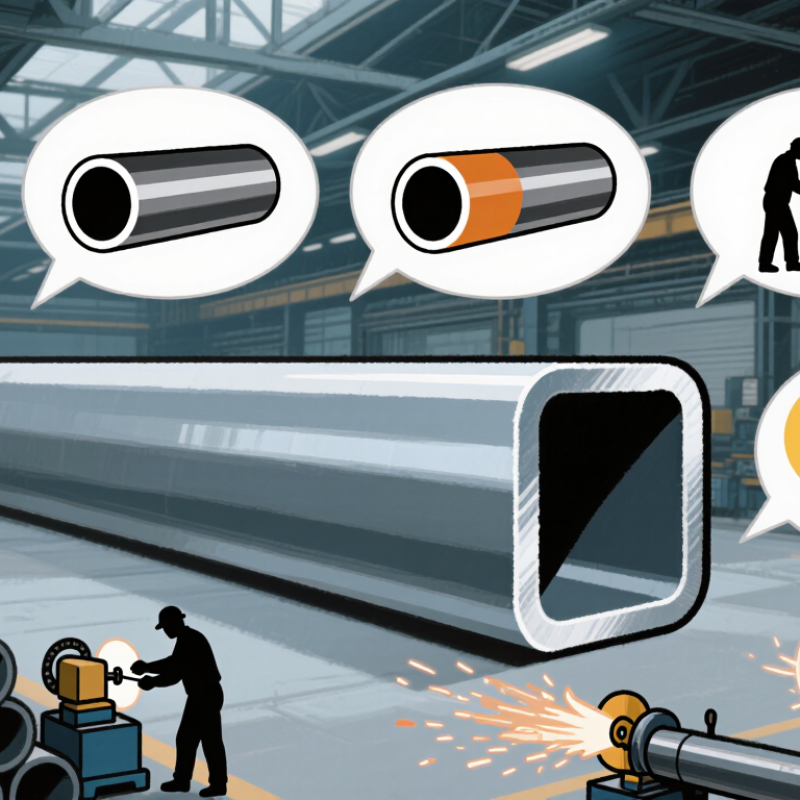
Choosing a pipe end chamfering machine starts with the pipe material. Carbon steel, stainless steel, aluminum, and plastic can respond differently to cutting forces and heat. Match the cutter and tooling to the material, wall thickness, and required edge finish. Stainless steel, for example, may need controlled cutting to limit heat and avoid a rough edge. Small details matter. Note any coating, scale, or burrs that could affect clamping or tool life.
Measure the actual outside diameter, not just the nominal pipe size. Also check wall thickness, ovality, and the range of sizes handled in a typical shift. A machine’s advertised diameter range may not reflect how securely it holds thin-wall or slightly irregular pipes. Test representative pieces when possible. A snug clamp is important, but excessive pressure can deform softer tubing.
Production needs shape the final choice. Estimate daily volume, changeover frequency, chamfer angle, and whether one or both ends need processing. Compare the full cycle, including loading and adjustment, rather than the cutting time alone. For mixed-size batches, quick, repeatable settings may matter more than maximum speed. One assumption deserves a second look: the fastest setup is not always the most consistent. Keep sample parts and inspect their edges before committing to a process.

Manual, semi-automatic, and automatic pipe end chamfering machines suit different production rhythms. A manual unit fits repair shops or short runs, where operators position each pipe and control the feed. It costs less and adapts quickly, but results depend on steady hands and consistent clamping. A small burr on a stainless-steel edge can disrupt later welding. Details matter.
Semi-automatic machines reduce repetitive feeding or cutting steps while leaving setup and inspection to the operator. They often suit mixed pipe sizes and moderate batches. Automatic systems can feed, clamp, chamfer, and repeat with less hands-on work, making them better candidates for stable, high-volume runs. Yet tooling changes, floor space, and maintenance can narrow the benefit. The IFR’s World Robotics 2024 report counted 4,281,585 industrial robots operating worldwide in 2023, up 10% from 2022; this signals wider automation, not proven demand for chamfering machines. Deloitte and the Manufacturing Institute projected that U.S. manufacturing may need 3.8 million workers by 2033, with 1.9 million jobs at risk of going unfilled. That labor outlook can inform investment, but it cannot choose a machine for you. Compare actual cycle time, pipe diameter range, edge quality, and changeover time using your own parts. I would not assume automation always wins. A poorly matched automatic line can sit idle.
| Comparison Factor | Manual | Semi-Automatic | Automatic |
|---|---|---|---|
| How the cycle works | The operator positions and clamps the pipe, then controls the cutting feed. The spindle may be powered, depending on the machine design. | The operator loads and clamps the pipe; a powered feed performs some or all of the chamfering cycle. | The machine may feed, clamp, chamfer, and discharge parts automatically, subject to its configuration and workpiece handling setup. |
| Operator involvement | High; the operator typically handles and controls each part. | Moderate; loading, unloading, and monitoring are usually required. | Lower during the machining cycle; operators still load or replenish material, monitor operation, and perform checks. |
| Production suitability | Often suitable for occasional work, prototypes, repairs, or low-volume production. | Often a practical option for recurring production at moderate volumes. | Best suited to repetitive, higher-volume work when cycle consistency and reduced manual handling are priorities. |
| Cycle consistency | Depends more on operator technique, setup, and inspection. | Can improve repeatability through controlled feed and consistent clamping. | Can provide repeatable cycles when tooling, settings, material, and workholding are properly controlled. |
| Setup and changeover | Generally straightforward, though manual adjustments may be needed for different pipe sizes and chamfer requirements. | Requires setup of feed, clamping, and tooling; changeover effort depends on the machine and product range. | May require more parameter, tooling, and handling-system setup; changeover can be more involved for varied products. |
| Pipe size and material range | Limited by the machine’s stated capacity, spindle, tooling, and clamping arrangement. | Depends on available clamping and feed capacity, tooling, and the materials specified for the machine. | Depends on machine capacity and configured tooling and handling equipment; automation does not itself determine size or material capability. |
| Typical purchase and operating considerations | Usually the simplest configuration, but labor per part may be higher. | Balances operator input with powered operation; consider utilities, tooling, and expected labor savings. | Typically involves greater equipment and integration requirements; evaluate utilization, maintenance, and handling needs. |
| Best fit when | Work is low-volume, parts vary frequently, and operator involvement is acceptable. | Production is regular, but flexibility and operator oversight remain important. | Demand is repetitive and sustained, and the process can be standardized for automated handling. |
Note: Capabilities, cycle time, supported pipe dimensions, and automation features vary by machine model. Confirm the manufacturer’s specifications using your pipe material, wall thickness, required chamfer geometry, and production target.
Choose a pipe end chamfering machine by checking its real working range, not just its largest advertised capacity. Confirm the pipe’s outside diameter, wall thickness, and material against the machine’s specifications. A thin stainless tube and a thick steel pipe place different demands on the spindle and cutting head. Capacity is not only about fit. The machine must hold the pipe steadily while removing material without chatter or distortion. Leave room for the parts you handle most often. Small details matter.
Precision should be judged on the finished edge. Check whether the machine can maintain the required bevel angle and leave a consistent land around the pipe. Ask how the pipe is clamped, and whether adjustment is straightforward when diameters change.
Measure several sample ends; a single good result may hide variation. Not always. Cutting tools matter just as much. Match the cutter geometry and insert material to the pipe, then consider tool life, replacement cost, and chip clearance. A sharp tool can produce a clean, even chamfer; a worn one may leave burrs that require extra work.
A tidy specification sheet can still miss setup realities, so test a representative pipe before deciding. The test may reveal an inconvenient limitation, but that is useful information.
How to Choose a Pipe End Chamfering Machine?
Check Setup, Safety Features, and Maintenance Requirements
Before comparing cutting speed, check how the machine fits your actual pipe workflow. Confirm its clamping range, end-preparation angle, and clearance for the longest workpieces. A pipe that shifts under the cutter can leave an uneven chamfer, even when the machine is powerful enough. Ask for a setup demonstration using your pipe material and wall thickness. Small details matter. Check whether adjustments are clearly marked and repeatable between operators.
Safety and maintenance deserve equal attention. Look for guards around the cutting area, accessible emergency stops, and secure clamping that keeps hands away from rotating parts. The U.S. Bureau of Labor Statistics reported 2.8 recordable injury and illness cases per 100 full-time workers in manufacturing in 2023; that broad figure is not specific to chamfering, but it underscores why safe work design matters. Ask how often cutters, bearings, and clamps need inspection, and whether routine service requires special tools. The U.S. Department of Energy’s Operations & Maintenance Best Practices Guide estimates predictive maintenance can cost 8–12% less than preventive maintenance, though results depend on the equipment and program. Keep a simple service log. It may feel like extra paperwork, and missed entries still happen, but tracking vibration, burrs, and cutter changes can reveal wear before it disrupts production.
When choosing a pipe end chamfering machine, assess the supplier as carefully as the machine. Ask who handles commissioning, operator training, and fault diagnosis. Get response times in writing. Check whether common items, such as cutter inserts, clamps, and bearings, are stocked locally. A machine may look affordable until a worn insert stops a shift. Ask for a sample cut on your pipe size and wall thickness, then inspect the bevel, burrs, and repeatability yourself.
Include service, tooling, installation, energy use, and expected downtime in the ownership estimate. The U.S. Department of Energy’s Operations & Maintenance Best Practices: A Guide to Achieving Operational Efficiency (2010) reports indicative maintenance savings of 8–12% for predictive versus preventive maintenance, and 25–30% versus reactive maintenance. These are broad program benchmarks, not guaranteed savings for a chamfering machine. Still, they show why service planning matters. A spreadsheet can miss the cost of a delayed replacement part. It happens. Ask suppliers for a written maintenance schedule, spare-parts lead times, and a clear warranty scope. Then compare those details against your shift pattern and production targets—not just the purchase price.
Headquarters
2980 Scott St, Vista, CA 92081
Phone: (760) 734-4177
Fax: (760) 734-4188
Open: 8:00 am – 4:30 pm
Texas
8051 Jetstar Dr #175 Irving, TX 75063
Phone: (972) 915-6888
Fax: (972) 915-6999
Open: 8:00 am – 4:30 pm
Florida
14231 Jetport Loop. #1 Fort Myers, FL 33913
Phone: (239) 225-4020
Fax: (239) 225-4024
Open: 8:00 am – 4:30 pm