How to Choose the Right Spider Coupling for Your Needs?
Selecting the right spider coupling is crucial for optimal performance in various mechanical systems. A recent industry report by the Mechanical Drive Systems Association highlights that improper coupling choices can lead to over 30% more energy loss and increased wear on machinery. The expert Bill Thompson, a leading figure in the coupling industry, once stated, "Choosing the right spider coupling can enhance efficiency and extend equipment lifespan."
Understanding the specific requirements of your application is essential. By considering factors like torque capacity, misalignment capability, and environmental conditions, you can make a more informed decision. The market offers a wide range of options, but not every chosen spider coupling will meet your needs perfectly. It’s important to evaluate compatibility with your machinery and operational demands.
In a landscape where every detail matters, the choice of a spider coupling should not be taken lightly. Reflecting on the potential for mismatched components may save you from costly setbacks. Selecting the right coupling is as much about technical specifications as it is about understanding real-world applications and limitations.
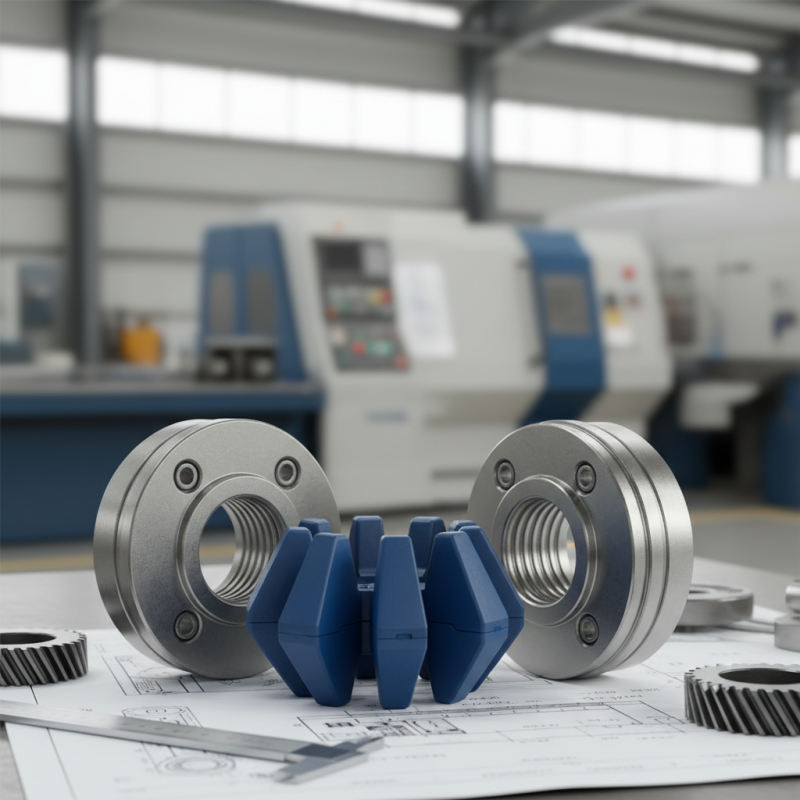
Understanding Spider Couplings and Their Applications
Spider couplings are vital in power transmission applications. They connect two shafts while compensating for misalignments. Their design includes a flexible spider insert. This allows for shock absorption and vibration reduction. These couplings can accommodate varied speeds and torques.
Applications of spider couplings are abundant. They are found in industrial machinery, conveyors, and pumps. Choosing the right coupling depends on the specific requirements of your system. Consider the torque, speed, and environmental factors. Some may overlook how temperature can affect material durability.
Selecting a coupling without proper assessment can lead to failures. For example, a too-flexible coupling may not support heavy loads well. In contrast, a rigid coupling might transmit excessive shock. Reflecting on the application is essential for the right choice. Each system is unique, and understanding these nuances is crucial.
Key Factors to Consider When Selecting a Spider Coupling
When selecting a spider coupling, several key factors come into play. First, understand the torque requirements of your application. This will help you choose a coupling that can handle the load without failure. Check the maximum torque rating of potential couplings. Underestimating this can lead to serious issues.
Another crucial factor is the misalignment tolerance. Spider couplings can accommodate various degrees of misalignment. Determine how much misalignment your system might encounter. Choosing a coupling with the right tolerance can save you from premature wear and tear. Keep in mind that too much misalignment can cause vibration and damage.
Tips: Always consider the operating temperature range. Extreme conditions can affect coupling performance. It’s advisable to consult technical data sheets for insights. Also, don’t overlook the material used in the coupling. Different materials have unique strengths and weaknesses.
Finally, ease of installation is worth thinking about. A complex installation can lead to mistakes. If you find yourself confused, it may be a red flag. Reflect on your installation process and look for simple solutions. Making the right choice ensures reliability and longevity in your working environment.
How to Choose the Right Spider Coupling for Your Needs?
| Key Factor | Description | Considerations |
| Torque Capacity | The maximum torque the coupling can handle. | Ensure the torque rating exceeds your application needs. |
| Speed Rating | The maximum rotational speed of the coupling. | Choose a coupling with a speed rating suitable for your application. |
| Alignment Tolerances | The misalignment capacity of the coupling. | Consider the types of misalignment expected in your system. |
| Material | The material from which the coupling is made. | Select based on chemical exposure, temperature, and wear resistance. |
| Size and Weight | Dimensions and weight of the coupling. | Fit and weight considerations for ease of installation. |
| Price | Cost of the coupling. | Balance between cost and performance requirements. |
Comparing Different Types of Spider Couplings
When selecting a spider coupling, it’s crucial to assess the specific application and operational requirements. There are various types of spider couplings available, each designed to serve distinct needs. For instance, some are made of rubber, providing excellent shock absorption. Others use a thermoplastic material, which can offer higher durability under extreme conditions.
It's important to consider flexibility and misalignment tolerance. Some couplings allow for greater angular misalignment, while others may have limited flexibility. Different environments might also necessitate specific materials. For high temperatures, a coupling made from heat-resistant materials may be needed. However, this choice might compromise flexibility.
Ultimately, the choice of a spider coupling can influence the overall performance of your machinery. It’s not just about picking a coupling; it’s about understanding how each type fits into your system. Don't overlook the maintenance requirements, either. Some materials can wear quickly, leading to potential failures. Balancing these factors can make the selection process challenging but essential for optimal performance.
Comparison of Different Types of Spider Couplings
This chart compares the torque transmission capability of different types of spider couplings based on their material and design effectiveness.
Evaluating Torque and Load Requirements for Your Setup
Evaluating torque and load requirements is crucial when selecting a spider coupling. Torque dictates how much power is transmitted. Different applications will have distinct torque needs. Heavy machinery demands high torque; delicate equipment requires much less. Knowing these details helps in making better choices.
Load requirements add another layer of complexity. Static and dynamic loads should be evaluated. For instance, if a coupling experiences frequent changes in load, it may need to handle peaks effectively. This inconsistency can lead to trouble if neglected. Sometimes, the numbers seem right, yet the real-world application proves otherwise.
In some cases, even small miscalculations can have big consequences. Testing different configurations can help identify the ideal solution. Monitoring performance after installation is vital. Adjustments might be necessary based on observed results. It's a learning process that unfolds over time.
Maintaining and Troubleshooting Spider Couplings
Maintaining spider couplings requires attention. Regular inspection is key. Check for wear and tear. Look for cracks or deformation in the elastomer. If you notice any issues, do not delay in addressing them. A small crack can lead to bigger problems. Regular maintenance prolongs the lifespan of your coupling.
Troubleshooting is part of the process. If you hear unusual noises, it’s a sign. Misalignment could be the culprit. Check for proper installation. Tighten any loose bolts. Vibration can indicate a problem as well. Don’t ignore it. If the coupling is vibrating excessively, it might be time for replacement. Over time, elastomers degrade. Be proactive. Waiting could lead to costly downtime.
Another common issue is temperature rise. Elevated temperatures can signal overload. Monitor the operating conditions regularly. If you frequently operate at high speeds, ensure the coupling can handle it. The load capacity is crucial. A wrong choice here can cause failures. Reflect on your usage patterns for optimal performance. Regular checks are essential for safe operation.