How to Choose the Best Eye Shadow Palette Supplier?
Choosing the best Eye Shadow Palette supplier requires more than comparing prices or reviewing attractive product photos. A dependable supplier should prove quality through consistent pigment, smooth blending, secure pan adhesion, and clear ingredient documentation. These details become visible when a sample is tested under natural light, studio light, and repeated application.
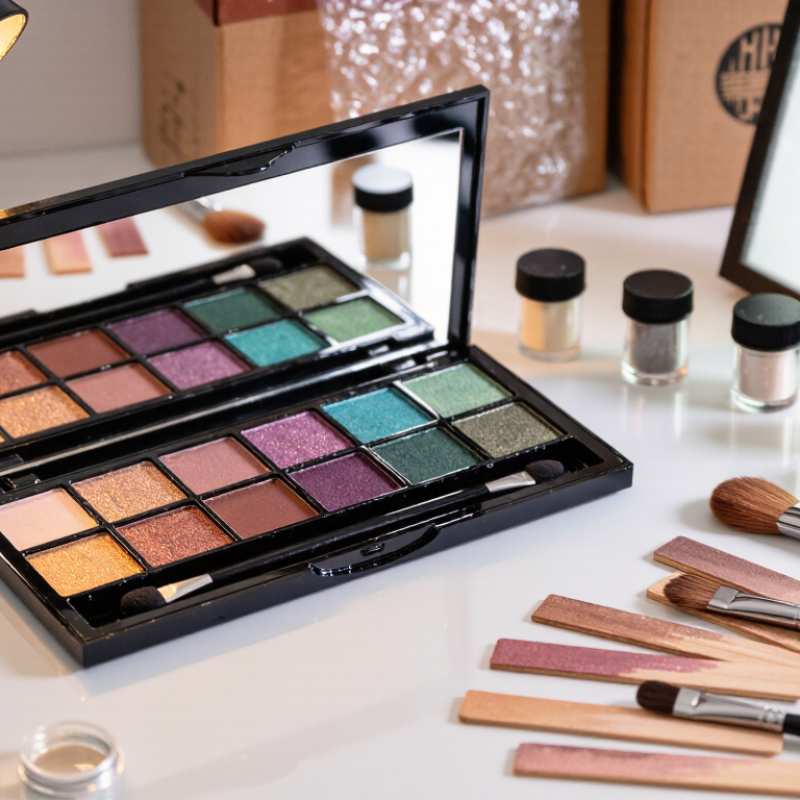
Bobbi Brown, makeup artist and founder of Bobbi Brown Cosmetics, said, “Makeup is a way for a woman to look and feel like herself, only prettier and more confident.” Her words highlight an important responsibility for suppliers: an Eye Shadow Palette should support creativity without compromising comfort, safety, or reliability. Buyers should examine shade performance, fallout, fragrance, packaging durability, and skin-feel before approving production. Requesting batch samples, ingredient lists, certificates of analysis, and realistic lead times can reveal how seriously a supplier manages quality.
Price still matters. It should not lead the decision. A low quotation may hide weaker pigments, fragile packaging, or costly delays. No supplier is perfect, and one overlooked detail can affect customer trust. I have seen promising samples fail after transport because the pans loosened inside the tray. That small failure matters. Compare several suppliers, ask difficult questions, and record every test result. A strong partnership grows from evidence, transparent communication, and the willingness to reconsider an attractive offer.
Define Product Needs with MOQ, Shade Count, Finish, and Packaging Data
How to Choose the Best Eye Shadow Palette Supplier?
Define product needs before comparing eye shadow palette suppliers. MOQ, shade count, finish, and packaging data should guide the first quotation. Grand View Research estimated the global eye makeup market at approximately US$16 billion in 2023, with steady growth expected through 2030. This growth increases supplier choices, but also creates inconsistent quality. A practical MOQ may range from 500 to 5,000 palettes, depending on formula, mold, and packaging customization. Request separate prices for each tier. A low MOQ can carry a higher unit cost.
Shade count needs careful testing. A 12-pan palette may offer better usability than a crowded 30-pan design. Ask for exact shade weights, pigment percentages, batch samples, and color consistency records. Specify finishes clearly, such as matte, shimmer, metallic, or satin. “Highly pigmented” is not measurable enough. Packaging data should include pan size, total fill weight, carton dimensions, material type, and closure testing. The Sustainable Packaging Coalition reported that packaging design strongly affects material use and waste, so compare structure before choosing decoration.
Tips: Build a supplier scorecard with MOQ, lead time, shade performance, finish accuracy, and packaging weight. Ask for three production samples, not one. Check the second and third batches. My own caution is simple: a perfect sample can hide weak process control. Also, forecasts are often wrong. Leave room for a smaller launch and a later reorder. A cheaper quote is not always a cheaper product.
How to Choose the Best Eye Shadow Palette Supplier?
Use MOQ, shade count, finish variety, and packaging complexity to define a clear product brief before comparing suppliers.
The chart shows commonly used private-label planning ranges: 500–3,000 finished units for MOQ, 6–18 shades, 2–5 finish types, and 2–4 primary packaging components. Actual requirements should be confirmed during supplier quotation and sampling.
Verify Pigments Against FDA Color-Additive Approval and Use Restrictions
How to Choose the Best Eye Shadow Palette Supplier?
Color compliance should guide supplier selection, not only shade variety. McKinsey’s 2023 beauty market analysis projects approximately 6% annual growth through 2027. That growth increases pressure to launch quickly, but speed cannot replace pigment verification.
Ask each supplier for the exact Colour Index name, batch number, Certificate of Analysis, Safety Data Sheet, and intended-use statement. Then compare every pigment with the FDA Color Additives database and 21 CFR Parts 73 and 74. A color permitted for cosmetics may still be restricted from the eye area. Some color additives also require batch certification under 21 CFR Part 80. The label “cosmetic grade” proves very little by itself.
A polished COA can still be incomplete. Request heavy-metal limits, microbial results, particle-size data, and finished-palette testing. Check whether the documentation covers the actual shade, not merely the raw pigment family. The FDA’s Cosmetics Color Additives guidance remains a useful authority for permitted uses and restrictions. It should be read with current regulations, not used as a shortcut.
In supplier audits, I would retain sealed retain samples from every production batch. Store them with photographs and lot records. This creates traceability when color, odor, or texture changes later. My own early checklists focused too heavily on shade matching. That was a weakness. A beautiful swatch means little if the pigment’s eye-area status remains unclear.
Audit Supplier GMP Practices Under ISO 22716 Cosmetic Guidelines
How to Choose the Best Eye Shadow Palette Supplier?
Audit Supplier GMP Practices Under ISO 22716 Cosmetic Guidelines
Choosing an eye shadow palette supplier requires more than reviewing color charts and price lists. Request evidence of GMP controls aligned with ISO 22716. The guideline covers production, quality control, storage, and shipment. It does not replace local cosmetic requirements. Ask for current procedures, training records, and internal audit findings. Strong suppliers can explain their system clearly.
During an audit, inspect powder handling areas, filling equipment, and employee hygiene practices. Check whether raw materials have approved specifications and lot traceability. Review batch records for weighing, blending, pressing, and packaging steps. Calibration labels should be visible on scales and testing instruments. Look for controlled cleaning schedules.
Small details matter. An unlabeled container can signal weak discipline.
For pressed shadows, examine controls against mix-ups, foreign particles, and shade contamination. Review microbial risk assessments, even when formulas contain little water. Request records for deviations, investigations, and corrective actions.
A reliable supplier will discuss failures without hiding them. That honesty is valuable.
Still, one audit cannot prove consistent performance. Follow-up visits, sample testing, and periodic documentation reviews remain necessary. I would also compare production records with delivered samples, because paperwork can look perfect while practical execution falls short.
Compare Samples, Defect Rates, Lead Times, and Batch-Traceability Records
How to Choose the Best Eye Shadow Palette Supplier?
A reliable evaluation starts with physical samples, not polished presentations. Request several batches with matching shades, finishes, pans, and packaging components. Check pigment payoff under daylight and warm warehouse lighting. Examine fallout, surface cracks, loose pans, and uneven pressing. Record results with dated photos and simple inspection sheets. One attractive sample proves very little. A supplier’s response to critical questions matters, too.
Ask for defect rates by batch, product type, and inspection stage. Do not accept one impressive percentage without supporting records. Review recent rejection reports, corrective actions, and replacement timelines. A low defect rate may hide inconsistent sampling. That is an easy mistake to make. My own checklist would not rely on averages alone. Randomly inspect cartons and compare findings against the supplier’s report.
Lead time should include raw materials, production, testing, packing, and dispatch. Request a realistic calendar for repeat orders, not only the first shipment. Then review batch-traceability records. Each lot should connect to raw materials, production dates, operators, inspection results, and release approval. Ask how quickly they can locate one affected batch. Test the answer with a mock trace exercise. If records are incomplete or handwritten, delays may follow. Good documentation feels ordinary, but it protects every purchasing decision.