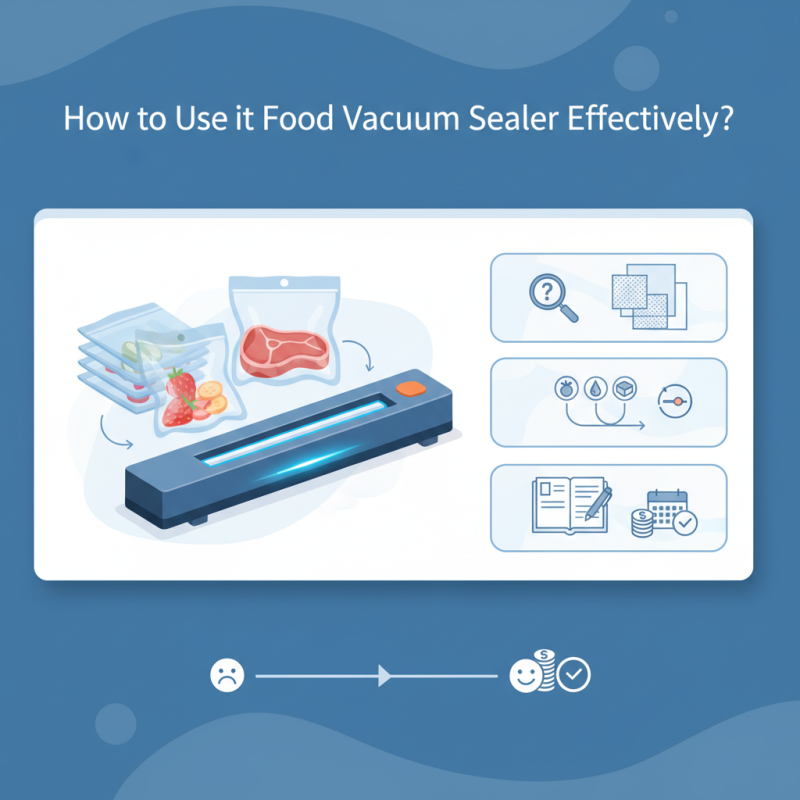
How to Use a Food Vacuum Sealer Effectively?
Using a Food Vacuum Sealer can transform your food storage habits. This handy device helps keep your food fresh for a longer time. It removes air from bags, preventing spoilage and freezer burn. If used properly, a Food Vacuum Sealer can save you money and time.
Many people struggle to use it effectively. They might not realize the importance of choosing the right bags. Others overlook how to seal various foods, which can lead to disappointing results. For instance, delicate items like berries can get crushed if not packed correctly.
To make the most of your Food Vacuum Sealer, take the time to learn its features. Experiment with different settings. You may find that practice helps improve your sealing technique. Consider keeping a record of what works best for your favorite foods. This way, you can refine your approach over time and avoid previous mistakes.
Understanding the Basics of Food Vacuum Sealers
A food vacuum sealer is a handy tool for preserving freshness. It removes air from bags, keeping food safe. Understanding its basics is key to using it effectively.
When sealing, always use compatible bags. Regular plastic bags won't work. They may even lead to spoilage. Try to fill the bags without overstuffing. Leave some space at the top for a proper seal. This is important for best results.
Tip: Clean your sealer often. Leftover food particles can affect performance. Another tip is to freeze liquids before sealing. This prevents messes and maintains vacuum integrity. Remember, practice makes perfect. Your first attempts may not be flawless. Keep experimenting to find what works for you.
Choosing the Right Vacuum Sealer for Your Needs
When selecting a vacuum sealer, consider your lifestyle and cooking habits. If you cook in bulk or often freeze perishables, opt for a heavy-duty model. These are designed for frequent use. A compact or handheld version might suit those who only seal small amounts occasionally. Think about the space you have, too. A larger machine needs countertop space. Small, portable units can fit in a drawer.
Tips for choosing the right sealer: Check the sealing strength. More watts mean better suction. Ensure it has adjustable settings for various foods. Some models allow for sealing liquids, which is useful for marinating. Consider the ease of cleaning and usability. A complicated interface can be frustrating.
Don’t forget the type of bags required. Some sealers might require specific bags. Buying compatible bags can be tricky. They add to the overall cost. Explore different options and read reviews. It might take time to find the perfect fit, so patience is key. Remember that no option is flawless. What works for one person might not for another. Reflect on your choices as you make your decision.
Comparison of Different Types of Vacuum Sealers
Preparing Food for Vacuum Sealing
Preparing food for vacuum sealing requires attention to detail. Start by selecting high-quality ingredients. Fresh produce maintains flavor and nutrients better than older options. Wash vegetables thoroughly and peel fruits as needed. This avoids excess moisture during sealing.
When portioning food, keep servings consistent. Uniform sizes help with even cooking and thawing. For example, slice meat or divide meals into appropriate sizes. This may require extra effort, but it pays off later.
Tip: Always let cooked food cool before sealing. Sealing hot food traps steam and moisture. This can spoil your food faster.
Don’t forget about air removal. Be gentle when placing food in the vacuum bag. Overstuffing may prevent a proper seal. A proper seal is crucial for preserving food.
Tip: Use a dry cloth to wipe the edges of the bags. This simple step helps avoid air leaks. It prevents accidental spoilage due to improper sealing.
Monitoring food freshness is vital. Even with vacuum sealing, check for signs of spoilage. Rely on your senses—look, smell, and feel. Always reflect on your process for improvement.
The Vacuum Sealing Process: Step-by-Step Guide
The vacuum sealing process is straightforward. Begin by preparing your food. Fresh ingredients should be cleaned and dried. Consider the type of food. Some items, like liquids, require special care. Knowing this can prevent messes.
Once your food is ready, load it into the sealer bag. Leave enough space at the top for sealing. It’s crucial to avoid overfilling. Missteps here can damage the seal. According to a study by the USDA, proper sealing can extend food freshness by up to five times.
After placing the bag, close the vacuum sealer. Check for alignment. An improperly closed lid can lead to air leaks. Many users overlook this step. Monitoring your machine is essential for optimal results. Lastly, label your bags with dates. This simple habit can minimize waste significantly. Remember, vacuum sealing is an art and requires practice to master.
Best Practices for Storing and Using Vacuum-Sealed Food
Vacuum sealing is an effective way to preserve food. However, it is essential to follow best practices to maximize its benefits. Research shows that vacuum-sealed foods can last up to five times longer compared to traditional storage methods. This significantly reduces food waste and saves money. For optimal results, use high-quality vacuum bags that are thick and BPA-free. Thin bags may not provide adequate protection, leading to freezer burn or spoilage.
Proper food preparation is crucial. Items should be clean and dry before sealing. Moisture can lead to antibacterial growth, counteracting the benefits of vacuum sealing. Studies indicate that certain foods, like cooked meats, can spoil faster if not sealed correctly. Always label packages with dates and contents. This helps in keeping track of freshness.
It’s also worth remembering that not all foods are suitable for vacuum sealing. Soft fruits and vegetables may bruise easily, while dry items may lose texture.
Storing vacuum-sealed food in a cool, dark place can also extend its shelf life. Temperature fluctuations can lead to condensation inside the bags. It’s best to check the integrity of the seals periodically. If you notice any air leaks, consider re-sealing or consuming the food promptly. Some users find vacuum sealing tedious, which can hinder its effectiveness. Consistent practice is key to forming a habit that reduces food waste and enhances meal prep efficiency.