Finding a hair dryer factory from china takes more than comparing prices or browsing polished product photos. Buyers need to understand what a supplier can make, how it checks quality, and whether its claims can be verified. A useful evaluation begins with the basics: factory location, production capabilities, experience with similar models, and the team responsible for quality control. Ask specific questions about motor options, heat settings, cord design, materials, packaging, and customization. Clear answers are a good sign. Vague replies deserve follow-up.
Samples can reveal details a catalog cannot. Check how the dryer feels in hand, whether buttons respond consistently, and whether the cord and attachments match the agreed specifications. Ask how the factory tests product performance and what inspection records it can share. Review relevant certificates carefully, and confirm that they apply to the exact model and target market. Small details matter. A sample may look excellent, while a later production batch differs; written specifications and agreed inspection steps can help reduce that risk.
This guide explains how to compare manufacturers, assess communication, review production evidence, and discuss pricing without overlooking service after delivery. It also considers common warning signs, such as unclear company information or pressure to place a large order before sample approval. Not every concern proves a supplier is unreliable. Context matters. A careful buyer should verify details independently, keep expectations realistic, and allow time for questions. The best choice is not always the cheapest or most polished. It is the factory whose capabilities, evidence, and communication fit the product requirements.
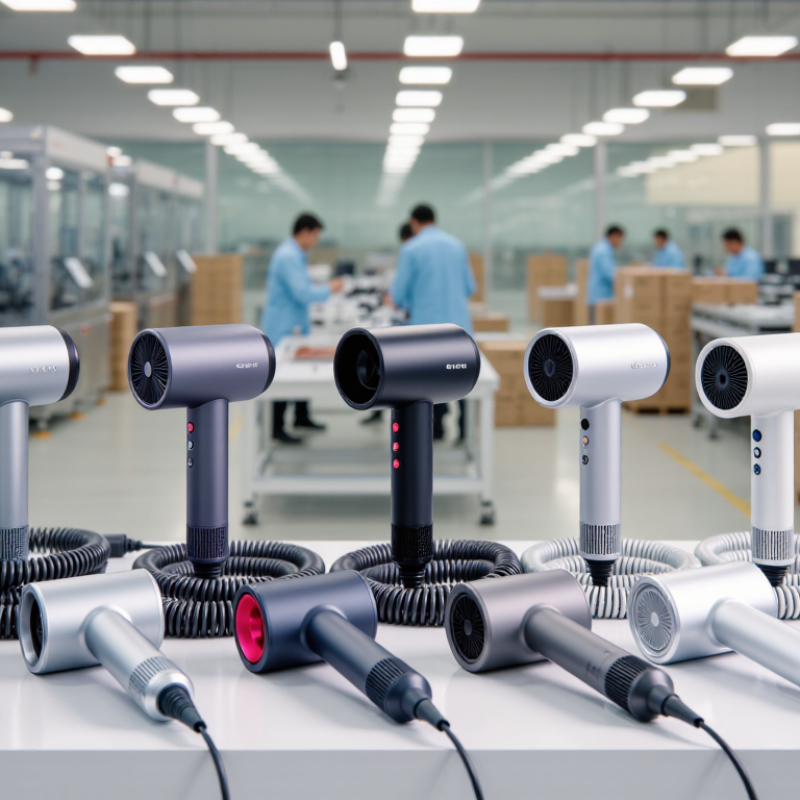
Before contacting a Chinese factory, define the exact user and use case: salon work, travel, or everyday home drying. The U.S. Department of Energy’s appliance energy-use data lists hair dryers at about 1,200 watts, a useful starting point for discussing power and circuit needs. Set the intended voltage and frequency, wattage range, plug type, and target markets in writing. Specify measurable performance too: airflow, temperature settings, heat-up time, noise limit, weight, cord length, and included attachments. “Fast drying” alone is too vague. Ask suppliers to show how they measure it.
Decide which features are essential and which can wait. A removable filter, cool-shot button, foldable handle, or particular motor type can affect cost, tooling, and testing. Grand View Research estimated the global hair dryer market at USD 9.4 billion in 2023, with a projected 5.4% CAGR from 2024 to 2030. That growth does not prove demand for your exact design. A practical specification sheet should also state sample quantities, packaging dimensions, finish references, and acceptable defect limits. Request performance and safety test records for the proposed configuration, not a similar model. One common misstep is choosing wattage first; it can overshadow weight, noise, and how the dryer feels after ten minutes. Test a production-representative sample before approving changes.
| Requirement Dimension | Decisions to Define | Common Specification Options | What to Confirm with the Factory |
|---|---|---|---|
| Target user and product type | Identify whether the dryer is for home use, travel, salon use, or a specific consumer segment. | Compact travel dryer; everyday household dryer; higher-output professional-style dryer. | Ask the factory to recommend a suitable motor, housing, control layout, and test plan for the intended use. |
| Rated voltage and frequency | Specify the destination market and whether one or multiple electrical versions are required. | Common versions include 100–120 V or 220–240 V; frequency may be 50 Hz, 60 Hz, or both, depending on the design. | Confirm the exact rating plate, plug type, power cord, and electrical test configuration for each version. Do not assume a dual-voltage model is available. |
| Power and heating performance | Set the desired drying speed and temperature range, balancing performance with electrical limits. | Many household models are approximately 1,200–2,000 W; higher-power models may be designed for markets with compatible voltage and outlet requirements. | Request measured power and temperature results at the rated voltage, plus the test method and operating conditions. |
| Motor and airflow | Choose the motor type, expected service life, airflow level, and desired sound profile. | Motor options may include brushed or brushless designs. Airflow and noise depend on the motor, fan, air path, and test setup. | Ask for motor specifications, airflow data, noise-test conditions, and endurance-test results for the proposed configuration. |
| Heat and speed settings | Define the number of settings and whether controls should be independent or combined. | Typical layouts offer multiple heat and airflow settings, such as two or three heat levels and two or three airflow levels, with a separate cool-shot control on some models. | Confirm the control sequence, actual temperature and airflow at each setting, switch durability, and whether the cool-shot function changes heater output as intended. |
| Heating element and temperature protection | Specify the heating element design, temperature control, and protection against abnormal operation. | Heating elements and temperature-limiting components vary by model; thermal cut-outs and over-temperature protection are common safety considerations. | Review the circuit design, protective component ratings, abnormal-operation test results, and production checks for the selected model. |
| Safety and compliance | Identify the regulations and certification requirements that apply in each sales market. | Requirements depend on the destination country or region and may include electrical safety, electromagnetic compatibility, materials, and labeling obligations. | Request applicable test reports and certificates for the exact model and factory. Verify their scope, validity, and match to the final product configuration. |
| Plug, cord, and strain relief | Specify plug style, cord length, conductor requirements, and any market-specific cord features. | Cord lengths around 1.8–3 m are commonly offered, but the suitable length and plug depend on the market and product design. | Confirm plug drawings, cord markings and ratings, strain-relief construction, bend or flex testing, and the exact cord supplied with each market version. |
| Weight, size, and handling | Set acceptable product dimensions, weight, handle shape, balance, and ease of use. | Requirements differ by product type; a travel model generally prioritizes compactness, while a salon-oriented model may prioritize reach and durability. | Request a production-representative sample and measure the complete unit, including the cord if weight is being compared. |
| Attachments and accessories | Decide which accessories are included and whether they must fit securely during use. | Common accessories include a concentrator nozzle and, for some models, a diffuser or storage accessory. | Confirm material, dimensions, attachment fit, heat resistance, included quantities, and whether accessories are included in the quoted price. |
| Housing and finish | Choose the housing material, color, surface finish, and required resistance to ordinary wear. | Plastic housings and a range of molded or coated finishes are common; the final choice affects appearance, weight, and cost. | Approve a color sample and finished sample. Define checks for color consistency, surface defects, assembly gaps, and heat-related deformation. |
| Packaging and labeling | Specify retail packaging, protective inserts, user instructions, language versions, and product markings. | Packaging can include an individual carton, protective inserts, and market-specific labels or manuals. | Confirm artwork approval, carton dimensions, packaging tests appropriate to the shipping route, required warnings, and the final contents list. |
| Quality control and sampling | Agree on incoming-material checks, production inspections, final tests, and acceptance criteria. | Checks can cover appearance, operation, electrical performance, safety functions, accessories, and packaging. | Request a written inspection plan, test records, sample approval process, defect definitions, and corrective-action procedure. |
| Commercial and delivery requirements | Set target order quantity, customization needs, required delivery timing, and spare-parts expectations. | Minimum order quantities and lead times vary with the model, components, packaging, and customization level. | Obtain a written quotation covering tooling or customization charges, sample and production lead times, order quantity assumptions, and agreed spare-parts support. |