Top Machine Vision Inspection Tips for Better Quality Control?
In the world of manufacturing, quality control is paramount. One area that has seen tremendous growth is Machine Vision Inspection. Industry expert Dr. Emily Tran once stated, “The future of manufacturing lies in precision, and machine vision is key to achieving it.” As machines take on more complex tasks, the need for high-quality inspections only intensifies.
Machine Vision Inspection systems can identify defects that human eyes might miss, increasing accuracy. However, implementing these systems is not without challenges. Companies often face integration issues, system calibration, and training personnel effectively. It’s crucial to address these hurdles to fully realize the potential of machine vision.
While many companies rush to adopt advanced technologies, a thoughtful approach is essential. Planning and strategy should guide the implementation. Companies must regularly evaluate their processes to improve inspection methods continually. Striving for perfection in Machine Vision Inspection requires a commitment to ongoing learning and adaptation.
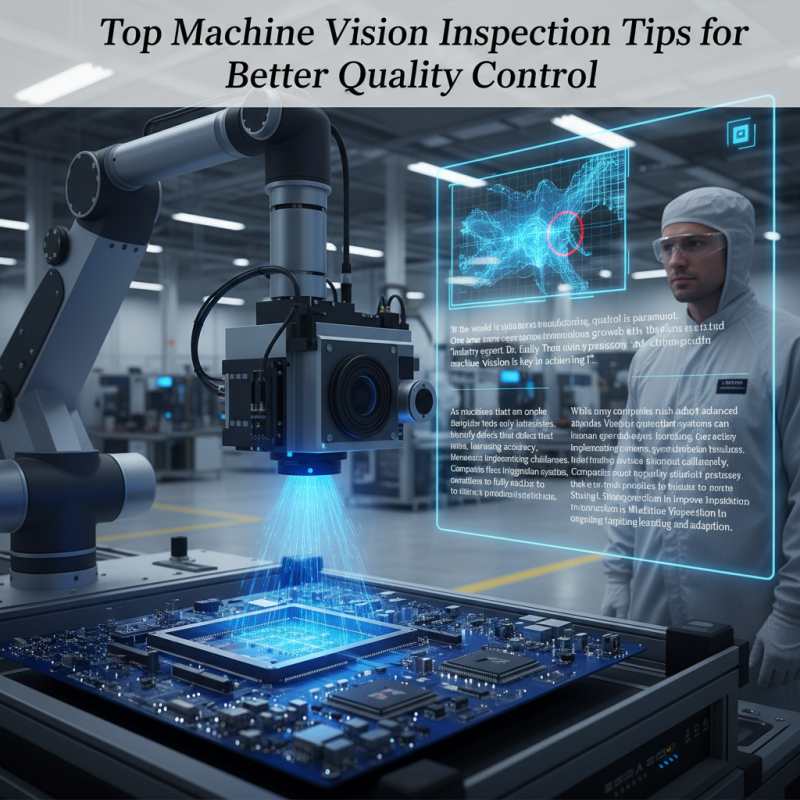
Understanding Machine Vision in Quality Control Processes
Machine vision systems are transforming quality control processes across various industries. According to a report by ResearchAndMarkets, the machine vision market is expected to grow significantly, reaching over $14 billion by 2025. This highlights the increasing reliance on automated inspection systems. These technologies can identify defects, measure products accurately, and streamline operations.
Integration of machine vision enhances efficiency but may present challenges. Poor lighting can lead to inaccurate readings. Alignment issues might also compromise inspection results. Even with advanced algorithms, some defects can be missed. These imperfections remind us that ongoing calibration and adjustments are essential for optimal performance.
Staff training remains crucial. Workers must understand how to interpret machine vision data correctly. A study from VDMA indicates that only 30% of employees report feeling confident about using these systems. This gap can impact productivity and quality. Regular training sessions and hands-on support can help bridge this divide, ensuring that both machines and personnel work in harmony.
Key Components of an Effective Machine Vision Inspection System
When establishing an effective machine vision inspection system, key components are essential. The first component is a high-resolution camera. It captures detailed images, ensuring accuracy in evaluation. A camera with inadequate resolution may overlook defects. Image processing software is equally crucial. This software analyzes images in real-time. It identifies anomalies that humans might miss. However, complex software can overwhelm operators. Simple interfaces are often more effective.
Lighting is another vital factor. Proper illumination enhances image clarity. Different products may require varied lighting techniques. Shadows can obscure details. Regularly adjusting lighting setups is necessary. It can be a tedious task, but critical for quality control. Integration with existing production systems matters too. Communication between components reduces downtime. However, perfect integration is hard to achieve. Sometimes, machinery may falter under strain.
Lastly, machine learning capabilities significantly enhance inspection systems. These algorithms improve over time, learning from past mistakes. Yet, they require substantial training data. A lack of sufficient data can lead to inaccurate assessments. Regularly revisiting training sets can mitigate this issue. Balancing technology with human insight is essential. Relying solely on machines may overlook context, so reflections on both are needed.
Common Challenges in Machine Vision Inspection and Solutions
Machine vision inspection can greatly enhance quality control in manufacturing. However, several challenges often arise during implementation. One common issue is poor lighting conditions. Inadequate illumination can lead to blurred images or shadows, making fault detection difficult. Adjusting light sources or adding diffusers can often help mitigate this problem.
Another challenge is the selection of appropriate camera resolution. Low resolution may miss small defects, while excessively high resolution can slow down processing speeds. Carefully balancing these factors is crucial for effective inspection. Moreover, the complexity of the objects being inspected can complicate the process. Variations in shape and size often require advanced algorithms for accurate analysis.
It's also crucial to consider operator training. Operators often overlook small details in image analysis, leading to oversight. Continuous training can bridge this gap and enhance accuracy. These challenges are part of the learning curve. Reflecting on and addressing these issues will lead to improved quality control and efficiency in machine vision inspection.
Top Machine Vision Inspection Tips for Better Quality Control
Best Practices for Implementing Machine Vision in Quality Assurance
Implementing machine vision in quality assurance can dramatically enhance product quality. Studies reveal that organizations utilizing machine vision systems report up to a 30% increase in defect detection rates. Improving accuracy is crucial. Simple mistakes, like misaligned cameras, can lead to poor assessments. Regular calibration ensures optimal performance and reduces errors.
Tips for effective implementation include conducting a thorough needs analysis before investing in technology. Knowing the specific requirements of inspection helps prevent unnecessary spending. Introducing a robust training program for staff is also vital. Well-trained operators can troubleshoot issues promptly, reducing downtime. Inadequate training often results in misuse of the systems and increased error rates.
Another important practice is to regularly review and update the vision systems. Technology evolves rapidly, and outdated software can hinder productivity. Implementing feedback loops from operators can provide insights into system performance. Encourage teams to share observations, as this can highlight necessary adjustments and improvements. The goal should be continuous improvement, even if it feels uncomfortable at times. Prioritizing machine vision integration ultimately streamlines operations and enhances quality control significantly.
Top Machine Vision Inspection Tips for Better Quality Control
| Tip | Description | Importance | Implementation Difficulty |
| Define Clear Objectives | Establish what you want to achieve with machine vision systems. | High | Low |
| Choose the Right Camera | Select cameras based on resolution, speed, and suitability for your application. | High | Medium |
| Lighting Optimization | Use appropriate lighting setups to enhance image quality. | Critical | Medium |
| Regular Calibration | Ensure that vision systems are calibrated regularly for accuracy. | High | Medium |
| Select Appropriate Software | Choose software that integrates well with your hardware and meets your needs. | High | High |
Evaluating the ROI of Machine Vision Technologies in Production Lines
Evaluating the ROI of machine vision technologies can be tricky. Many companies invest heavily without clear metrics. It's essential to look at both tangible and intangible benefits. For instance, improved accuracy in inspections leads to fewer defects. This reduction saves costs on rework and waste. However, measuring these savings can be complex.
Implementation challenges often arise during integration. Staff may resist new systems, worried about job security. Training is crucial; it takes time and resources. Not all teams adapt equally. Regular feedback from operators can help refine processes. This way, the systems can be optimized based on real-world usage.
Focusing on data analysis enhances ROI assessment. Collecting data on defect rates before and after using machine vision is vital. Sometimes, the ROI might not be as high as expected. This realization can prompt a reassessment of goals and expectations. Fine-tuning technology and processes is an ongoing journey, not a one-time fix.