Top 10 Automatic Labeling Machines for Global Buyers?
The market for Automatic Labeling Machines is experiencing significant growth. According to a recent report by MarketsandMarkets, the labeling machinery market is projected to reach $5 billion by 2025. This surge reflects a rising demand in various sectors, including food and beverage, pharmaceuticals, and consumer goods.
Automated labeling systems offer speed and accuracy. They minimize human error, ensuring consistency in production lines. In industries where precision is critical, these machines play a vital role. However, challenges exist. Not all automatic machines fit every product type, leading to potential mismatches in labeling solutions.
Investing in the right Automatic Labeling Machine is crucial for efficiency. Buyers need to evaluate their specific needs. This includes product size, speed requirements, and label types. Notably, the right choice can drastically improve operational workflows. However, it is important to reflect on the long-term impact and potential limitations of each machine.
The Importance of Automatic Labeling Machines in Modern Manufacturing
Automatic labeling machines are increasingly vital in modern manufacturing. These machines enhance productivity by streamlining the labeling process. According to a report by MarketsandMarkets, the global labeling equipment market was valued at $6.7 billion in 2020 and is projected to reach $10.0 billion by 2025. This illustrates the growing importance of efficient labeling systems.
The versatility of labeling machines is remarkable. They can handle various product shapes and sizes. Industries utilize them for bottles, boxes, and bags, boosting efficiency and reducing human error. Yet, the dependence on advanced technology raises concerns. Manufacturers must continuously adapt to changing industry standards and consumer demands. Additionally, the need for ongoing maintenance can be a challenge.
Data also underscores that automation can reduce labor costs by up to 30%. However, reliance on machines can create vulnerability during technical failures. Balancing automation with skilled labor remains essential. Companies should not overlook the human aspect in this technology-driven era. Investing in training is just as crucial as upgrading machinery.
Key Features to Consider in Automatic Labeling Machines
When selecting an automatic labeling machine, understanding key features is crucial. Efficiency is vital. A fast labeling speed can significantly increase productivity. Machines that handle various label sizes and types offer flexibility. This adaptability can be essential for businesses with diverse products.
Ease of operation is another important consideration. User-friendly controls simplify training for staff. It’s beneficial to choose models with intuitive interfaces. This minimizes errors during production. Additionally, machines equipped with sensors enhance accuracy. They ensure that labels are applied correctly every time, reducing waste.
Durability and maintenance should not be overlooked. High-quality materials can extend the lifespan of the machine. Regular maintenance is necessary to keep the equipment running smoothly. Organizations should assess the support provided by manufacturers for repairs and spare parts. This can affect operational efficiency in the long term. Adopting a machine that aligns with business needs while considering these features is essential for success.
Top 10 Automatic Labeling Machines for Global Buyers
| Machine Type |
Labeling Speed (BPM) |
Labeling Accuracy (%) |
Label Size (mm) |
Application |
Price Range (USD) |
| Vertical Wrap |
80 |
98 |
100 - 150 |
Beverages, Chemicals |
$5,000 - $10,000 |
| Horizontal Wrap |
70 |
95 |
50 - 200 |
Food Products |
$6,000 - $12,000 |
| Cardboard Box Labeling |
60 |
97 |
75 - 250 |
Packaging |
$7,500 - $15,000 |
| Benchtop Labeling |
50 |
98 |
20 - 100 |
Small Products |
$2,000 - $4,000 |
| Sleeve Labeling |
100 |
96 |
150 - 300 |
Cylindrical Products |
$8,000 - $20,000 |
| PR Labeling Machine |
40 |
99 |
30 - 90 |
Pharmaceuticals |
$5,500 - $11,000 |
| Wrap Around Labeling |
85 |
97 |
50 - 200 |
Consumer Products |
$6,500 - $14,000 |
| Label Applicator |
30 |
95 |
20 - 50 |
Various |
$1,500 - $3,500 |
| Pressure Sensitive Labeling |
90 |
99 |
30 - 75 |
Health & Beauty |
$4,000 - $9,000 |
| Inline Labeling System |
95 |
97 |
100 - 180 |
Industrial Use |
$10,000 - $25,000 |
Top Brands Dominating the Global Automatic Labeling Machine Market
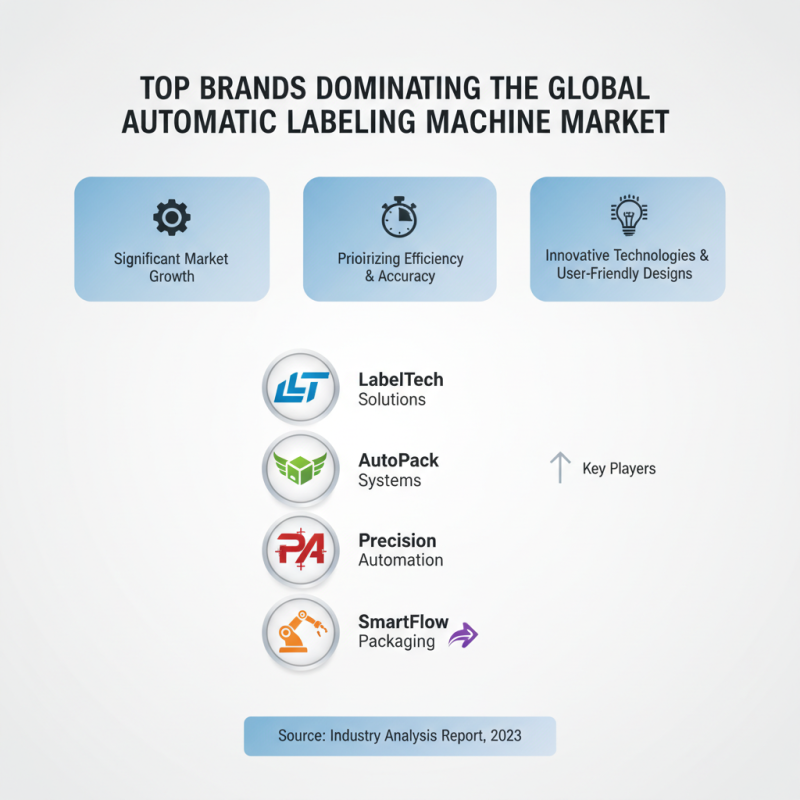
The automatic labeling machine market has seen significant growth in recent years. Businesses are increasingly prioritizing efficiency and accuracy in their packaging processes. As a result, several key players have emerged, dominating the global landscape. They focus on innovative technologies and user-friendly designs.
Many of these brands offer a variety of labeling solutions tailored to different industries. They ensure compliance with international standards while also addressing specific customer needs. Some machines are designed for high-speed operations, while others cater to smaller production runs. However, the complexity of these machines can sometimes be daunting for new users. Each model comes with its own learning curve, which may lead to inefficiencies during initial operations.
Despite their advancements, not all automatic labeling machines are perfect. Users may encounter occasional mechanical issues or software glitches. This reflects the ongoing challenges in maintaining reliability over time. Continuous improvement is needed in the industry to enhance durability and user experience. The future of automatic labeling machines depends on how well these brands adapt to changing market demands and technological advancements.
Market Trends Driving Demand for Automatic Labeling Solutions
The demand for automatic labeling solutions is on the rise. This shift is largely driven by the growth of e-commerce and retail sectors. Businesses seek efficiency and accuracy in their operations. Automatic labeling machines deliver consistent results, reducing manual labor. They streamline the labeling process, which is critical for high-volume production.
Consumers increasingly expect high-quality packaging. This has pushed manufacturers to adopt advanced labeling technologies. Automatic machines help meet these standards effortlessly. However, not all machines provide the same level of precision. Choosing the right machine requires thorough research. It’s essential to understand specific product needs.
Moreover, many companies overlook maintenance when selecting labeling solutions. Regular upkeep can significantly impact performance. Ignoring this can lead to increased downtime and costs. Therefore, while the features matter, reliability shouldn’t be neglected. Businesses that grasp these nuances can transform their labeling processes effectively.
Comparative Analysis of Cost-Effectiveness of Top Labeling Machines
The market for automatic labeling machines is rapidly expanding. Recent industry reports indicate a staggering growth rate of 6.5% annually. With more businesses shifting towards automation, cost-effectiveness has become a key concern. Many companies are seeking machines that not only meet their labeling needs but also stay within budget constraints.
Analyzing the cost-effectiveness of these machines is vital. A study by industry analysts revealed that mid-range labeling machines provide the best return on investment, recovering their costs in less than two years. However, factors such as maintenance, energy consumption, and operational efficiency must be considered. Companies often overlook hidden costs that can significantly impact their bottom line.
Performance metrics play a crucial role in this analysis. Machines with higher label output often have lower costs per label. Some top models claim outputs of up to 300 labels per minute. Yet, not all machines deliver consistent quality at high speeds. Businesses should conduct regular checks and maintenance to ensure optimal performance, as deterioration can lead to increased waste and costs over time. Quality should never be sacrificed for speed or low prices.
Top 10 Automatic Labeling Machines Cost-Effectiveness
This chart illustrates the cost-effectiveness of the top 10 automatic labeling machines based on their price and functionality.