Top A4 Label Paper Suppliers for Global Buyers
A4 Label Paper looks simple on a purchasing sheet. In practice, it must feed cleanly, print sharply, and release without curling. A small mismatch can leave labels skewed across a stack of sheets. For global buyers, supplier selection therefore means checking more than price. Compare face stock, adhesive options, sheet tolerances, packaging, and documented quality controls.
MarketsandMarkets’ Labels Market report estimated the global labels market at USD 53.9 billion in 2023 and forecast USD 67.9 billion by 2028. This broad category is not an A4 Label Paper market estimate. Still, it signals the scale of competition among label materials and suppliers. The figures should guide context, not replace product-level verification. Buyers should request technical data sheets and sample sheets, then test them on their own printers and surfaces.
A credible supplier should explain how paper weight, finish, adhesive, and release liner affect performance. Ask for evidence, not just confident claims. Label-industry analyst Mike Fairley is a recognized source on label technology, but I cannot verify a specific, attributable quotation from him about A4 Label Paper. Inventing one would weaken this guide. A practical reminder is worth stating without false attribution: “Test the sheet in the real workflow.” Some details are easy to overlook. This guide compares suppliers through the checks that matter at receiving, printing, and application.
What A4 Label Paper Is and Where It Is Used
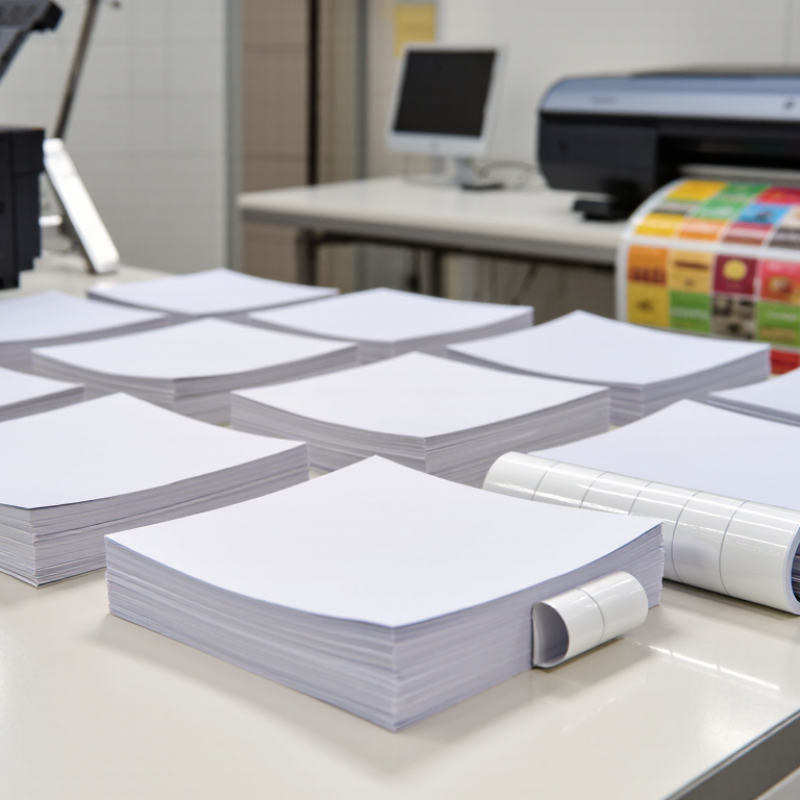
A4 label paper is a printable sheet measuring 210 by 297 millimetres. It usually has a paper face, pressure-sensitive adhesive, and a backing liner that keeps the labels in place before use. Sheets may contain a few large labels or many small ones, depending on the job. The surface finish and adhesive affect print clarity, handling, and how well a label stays attached. Small details matter.
A4 labels are common in offices, warehouses, shops, and small production rooms. They can identify folders, mark storage bins, display product details, or carry delivery addresses. On a packing table, for example, a clearly printed label helps staff match a parcel with its paperwork. For inventory, consistent sizes make shelves easier to scan. Still, “A4 label paper” does not guarantee that every sheet fits every printer; coatings, label spacing, and adhesive construction vary.
Tips: Check whether the sheets are intended for inkjet or laser printing, and compare their layout with your software template. Feed one test sheet before printing a full batch. Keep unused sheets flat and dry, since curled corners can cause misfeeds. If print alignment is slightly off, adjust the template rather than forcing the paper through repeatedly.
Key Materials, Adhesives, and Printing Specifications
A4 label paper usually combines a printable facestock, pressure-sensitive adhesive, and release liner. The facestock may be uncoated, coated, or synthetic. Uncoated paper suits basic text, while coated surfaces can produce sharper graphics. Adhesive choice depends on the target surface, temperature, moisture, and expected removal. Permanent adhesive may grip cartons well but prove difficult to remove from glass. Removable grades can lift more easily, though performance varies with storage and surface cleanliness. That distinction matters.
Printing specifications need equal attention. Inkjet sheets often require an ink-receptive coating to limit smudging; laser-compatible stock must tolerate fuser heat without curling. Check sheet thickness, label dimensions, gaps, and margins against the printer’s feed path. A narrow leading edge can cause jams. So can a liner that is too flexible. Ask suppliers for material data and test samples on the actual printer and packaging surface. Record results after printing and after storage, not just on day one. Specifications are useful, but they do not replace a practical trial. Small batch differences can still affect feeding or adhesion.
How to Assess A4 Label Paper Suppliers
When assessing A4 label paper suppliers, compare specifications rather than relying on a product description. A4 sheets measure 210 × 297 mm, but paper weight alone does not determine performance. Check face-stock thickness, adhesive type, liner quality, and label dimensions. Ask whether the sheets are designed for your printer, especially if you use laser or inkjet equipment. A small mismatch can cause smudging, curling, or adhesive buildup.
Request samples from the same production grade you plan to order. Print fine text and solid color blocks, then check feeding, alignment, drying time, and label removal. Ask how the supplier controls batch consistency and protects stock from heat and moisture. Review packaging details and realistic lead times, too. A polished sample can still hide variation between batches; that is worth checking before a large purchase. No checklist catches everything.
Tips: Test several sheets on your own printer. Store samples flat, and note the room conditions. Ask for written specifications and a clear process for reporting defects. If an answer feels vague, ask again. Small details matter.
Supplier Types and Global Sourcing Options
A4 label paper buyers can source from paper mills, converting specialists, or regional distributors. Mills may offer steadier material specifications and volume pricing, but often require larger orders. Converters cut and pack sheets, making it easier to request specific label layouts or adhesive types. Distributors can supply smaller quantities and hold local stock. Check face-paper weight, liner release, sheet flatness, and printer compatibility before comparing quotes. A sample sheet can reveal curl or adhesive ooze that a specification sheet misses.
For overseas sourcing, compare direct factory orders with regional stock and consolidated shipments. UNCTAD’s Review of Maritime Transport 2024 notes that shipping carries over 80% of world trade by volume, so freight delays and port handling can affect delivery plans. The World Bank’s Logistics Performance Index 2023 assessed 139 economies across areas such as customs, infrastructure, and shipment timeliness. These reports offer useful context, not a guarantee for any supplier. A low quote can still disappoint.
Tips: Ask for a current technical data sheet, a pre-production sample, and written tolerances for sheet size and curl. Confirm carton protection against moisture, plus lead time and reorder quantities. Small details matter. I would not choose on price alone; that judgment can be wrong when freight or print consistency shifts.
Ordering, Quality Control, and International Shipping Considerations
For global buyers, a reliable order starts with a written specification, not a catalog photo. State A4 dimensions, sheet count, paper weight, face-stock finish, adhesive type, and liner thickness. Confirm whether the labels suit inkjet, laser, or both; coatings can react differently to printer heat. Request samples from the intended production lot, then test feeding, smearing, edge lift, and removal. Small tests matter. A sample may still differ from bulk production, so agree on tolerances and inspection criteria before confirming the order.
Quality control should include sheet alignment, clean die-cut edges, consistent adhesive coverage, and moisture protection. Ask how the supplier checks these points and how defects are recorded. Keep photos and sample sheets as references. No checklist catches everything, and I would not treat a supplier’s inspection report as a substitute for checking received goods. For shipping, confirm carton dimensions, pallet requirements, dispatch dates, and who handles export documents and destination charges. A clear freight quote can prevent surprises. Use sturdy cartons with inner wrapping; humid transit can curl paper or weaken packaging. Build in time for port delays, and check several cartons on arrival before distributing the stock.
Top A4 Label Paper Suppliers for Global Buyers
A4 sheet dimensions are standardized under ISO 216 and provide a useful baseline when comparing label-paper specifications.
Buyer note: Confirm label layout, margins, adhesive, liner, packaging, and shipping terms with each supplier; these specifications vary by product and order.