
What Are the Top Printed Aluminium Foil Types in 2026?

Printed Aluminium Foil is not one product category. It is a family of printed materials, from lidding foil and blister laminates to foil-paper wraps and flexible-packaging structures. In 2026, choosing among them means balancing print clarity, barrier performance, sealing needs, and the package’s intended use. A sharp metallic finish may catch the eye, but the layer beneath it does the quiet work.

The Flexible Packaging Association’s 2024 State of the U.S. Flexible Packaging Industry report places U.S. flexible-packaging sales at about $42.5 billion in 2023. That figure covers flexible packaging broadly, not printed foil alone, but it shows the scale of the market in which foil-based structures compete. FPA president and CEO Alison Keane is a relevant industry voice; her publicly documented perspective can help frame market context, though a precise, attributable quotation about printed aluminium foil should be verified before publication. A useful takeaway, stated here as a paraphrase rather than a direct quote, is that package performance depends on the complete structure—not the printed surface alone.

This guide compares the leading printed aluminium foil types by construction, appearance, and practical application. Expect familiar details: crisp graphics on a foil lid, a paper-backed wrap that folds cleanly, or a laminate designed to protect aroma and product quality. Not every option suits every line. Print adhesion, foil thickness, and sealing conditions can change the result, and this overview cannot replace converter-specific testing.
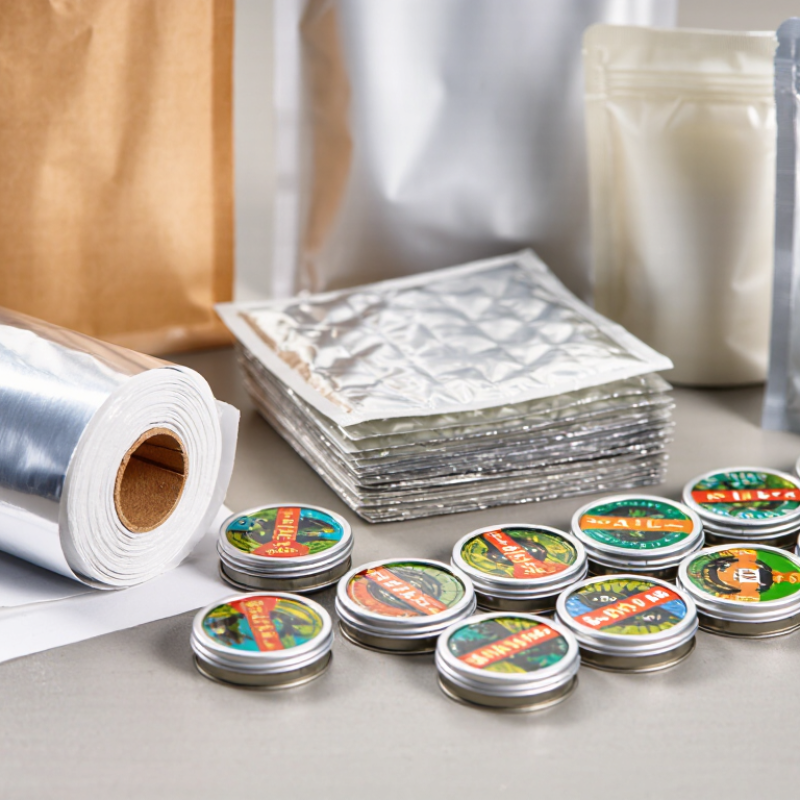
What Are the Top Printed Aluminium Foil Types in 2026?

Key Properties That Define Printed Aluminium Foil

Printed aluminium foil is not defined by its artwork alone. Its performance depends on foil thickness, surface condition, ink adhesion, and the layers bonded to it. A smooth, clean surface helps printed details stay sharp, while suitable primers can improve ink grip. Small details count.

Common forms include flexible packaging foil, lidding foil, and decorative foil laminated to paper or plastic. Each serves different converting needs. Flexible packs need foil that bends without excessive cracking; lidding stock must run reliably through sealing equipment. The foil itself may provide a strong barrier to light, moisture, and gases, but the finished laminate’s performance depends on every layer and seal.

Print quality should be checked after converting, not only on a flat sample. Creases, heat, and tension can expose weak adhesion or distort fine lettering. Ask for tests that reflect the real process, such as rub resistance, seal performance, and inspection after folding. There is a trade-off: heavier foil can feel sturdier, yet may cost more and behave differently on a fast production line. No single specification suits every use. It is easy to overvalue a bright, crisp print and overlook how the package handles after filling.

Printed Aluminium Foil Types for Food and Beverage Packaging

What Are the Top Printed Aluminium Foil Types in 2026?

Printed Aluminium Foil Types for Food and Beverage Packaging

Printed aluminium foil appears in several familiar food and beverage formats. Lidding foil seals yoghurt cups, dairy desserts, and some ready-meal trays. It can carry clear product details and colourful graphics while protecting the contents. The foil’s inner surface may have a heat-seal coating matched to the container. Fit matters. A lid that peels too easily or seals unevenly can create problems on the packing line.

For coffee, snacks, powdered drinks, and other products, foil is often laminated with plastic or paper. Printing usually sits on the package’s outer layer, while the foil layer helps limit exposure to light, moisture, and oxygen. The exact protection depends on the full structure and how well the seams are made. Not every format. Chocolate and butter wrappers may use thin, printed foil or foil-based laminates, chosen for easy folding and close wrapping.

When comparing types, check the product’s storage needs, filling conditions, and opening experience. Ask whether the packaging keeps its seal after transport, not just on a sample roll. Food-contact coatings and inks should be selected for their intended use, with specifications confirmed by the packaging supplier. One trade-off is easy to overlook: foil-containing laminates can be difficult to sort for recycling where suitable collection systems are unavailable. The right option is not always the most elaborate one.

What Are the Top Printed Aluminium Foil Types in 2026?

Typical foil-layer thicknesses for food and beverage packaging formats

Bars show representative midpoint thicknesses in micrometres (µm); the typical ranges are shown in the labels. Flexible packaging and beverage-carton foil layers are generally thinner, while lidding and household foil formats commonly use thicker foil. Actual specifications vary by product, barrier needs and converting process.

Printed Aluminium Foil for Pharmaceutical Blister Packs

For pharmaceutical blister packs, printed aluminium foil usually serves as the lidding layer, protecting each formed cavity. It provides a surface for batch details, dosage information, and machine-readable codes. The foil must also release cleanly under pressure or peel as designed. Small details matter.

Common constructions combine a printable foil face, suitable inks, and a heat-seal lacquer facing the blister. The ink may sit beneath a protective coating, depending on the converting process. Push-through packs and peelable packs need different seal behavior, so the foil should match the tray material and opening method. A neat print is not enough. Seal strength, pinholes, coating uniformity, and code legibility need checks on the actual packaging line. Test real conditions.

For a 2026 specification, ask for documented material structure, print controls, and testing against the intended blister film. Storage, transport, and sealing temperature can change performance; results from one setup may not transfer to another. I would not treat a glossy sample as proof of protection. Print can look perfect, while a weak seal remains easy to miss. That deserves a second check.

Printed Foil for Household, Cosmetic, and Industrial Products

In 2026, printed aluminium foil is less a single material than a family of packaging surfaces. Common formats include lidding foil, flexible foil laminates, and pre-printed wrap stock. Each combines a metal layer with inks, coatings, or other materials for a specific use. That construction matters more than a glossy design. For household goods, printed wraps can identify refill packs, cleaning accessories, or small hardware. But foil alone does not determine barrier performance; thickness, seal design, and the full laminate matter.

Cosmetic packaging often uses printed foil sachets and laminate lids for masks, creams, and sample portions. Fine text, consistent color, and rub resistance are practical priorities on a compact pouch. Industrial applications favor clear part codes, batch details, and durable identification on foil-faced labels or barrier packs. These prints can support handling and traceability, but they cannot replace proper inspection records. A premium appearance is useful. It is not proof of protection. One detail is easy to miss: foil can crease, and ink may abrade at fold points.

Tips: Match the print process and coating to the product’s contact conditions, storage time, and sealing method. Ask suppliers for documented substrate and ink specifications, then test finished packs under realistic heat, humidity, and handling. Check small lettering after folding, not only on flat samples. If results vary, revisit the artwork and converting settings; a perfect proof may not reflect production.

How to Choose the Right Printed Aluminium Foil in 2026

Choosing the right printed aluminium foil in 2026 starts with its job, not its appearance. For dry snacks, a lightweight foil laminate may offer enough protection. Products needing stronger moisture or oxygen barriers may require a different structure. Ask the supplier for the foil thickness, laminate layers, and intended sealing conditions. Small details matter: a pouch that seals at one temperature may wrinkle or leak at another.

Next, check how the print will perform during filling, transport, and storage. Request samples and inspect them after bending, rubbing, and sealing. Confirm that inks, coatings, and adhesives suit the intended packaging use, especially when the foil will contact food. A bright finish can look excellent on a flat sheet but dull after folding. I would not trust appearance alone. Test the actual package on your production equipment before approving a large order.

Tips: Match the foil to the product’s shelf-life needs and packing speed. Share your sealing temperature, package shape, and storage conditions when requesting samples. Keep one sample for comparison. A small trial takes time, admittedly, but it can reveal weak seals, scuffed print, or awkward handling before full production.

What Are the Top Printed Aluminium Foil Types in 2026? — How to Choose the Right Printed Aluminium Foil in 2026

Printed aluminium foil is commonly supplied as a foil-based laminate. In many flexible packs, graphics are printed on a polymer layer and then laminated to the foil, protecting the ink and helping maintain package integrity. The best construction depends on the product, filling process, required barrier, sealing method, and recycling or disposal requirements.

Type Typical construction Common applications Printing and appearance Key advantages Choose it when… Important checks
Flexible packaging laminate Printed outer film / aluminium foil / inner sealant film; exact layers vary by product and converting process. Snack foods, coffee, confectionery, powdered products, and other packaged goods. Typically flexographic or gravure printing on the outer film, followed by lamination. Supports multi-colour graphics and a range of finishes. Can combine a printable exterior, foil barrier, and heat-sealable inner layer in one flexible structure. You need a flexible pack with strong light, moisture, and oxygen protection, subject to the finished structure and package design. Confirm product compatibility, sealant choice, pack format, barrier target, and whether the laminate suits the intended end-of-life route.
Printed foil lidding Printed or coated aluminium lidding foil, often with a heat-seal lacquer selected for the container material. Sealed cups, trays, and containers for foods, dairy products, and some pharmaceutical or personal-care products. Graphics may be printed on the outer face; the product-contact side is selected and finished for the required sealing application. Provides a peelable or non-peelable closure option when matched to the container and seal system. You need a printed, heat-sealed lid for a compatible cup or tray. Test seal strength, peel behaviour, line speed, container resin, product contact, and any required tamper evidence.
Blister-pack foil Printed push-through lidding foil, commonly using a hard-temper aluminium foil with a heat-seal coating. Unit-dose pharmaceutical and healthcare blister packs. Printing is commonly applied to the outward-facing side for product information, identification, or branding; coatings and print must suit the converting process. Supports individual cavity closure and push-through access when designed for the blister material and opening requirements. You need lidding for a blister pack and the intended pack requires a push-through opening format. Validate seal compatibility, forming and cutting performance, print legibility, regulatory labelling, and the required barrier for the product.
Retort pouch laminate Printed outer layer / aluminium foil / heat-resistant inner sealant layer; additional layers may be used for the specified process. Shelf-stable meals, sauces, and other products processed in a retort pouch. Graphics are generally protected within the laminate rather than left exposed to the product or retort environment. Can provide a flexible, high-barrier pack designed for heat processing when the complete laminate is properly specified and validated. Your product requires retort processing and the package must be engineered for its actual time, temperature, and pressure conditions. Require supplier validation of the full structure, seals, pouch integrity, and process conditions; do not select by foil layer alone.
Printed sachet or stick-pack laminate Printed flexible laminate; some constructions include aluminium foil, while others use metallised or non-foil barrier layers. Single-serve powders, drink mixes, sauces, condiments, and personal-care samples. Flexographic or gravure printing is commonly used on the outer web, with artwork arranged for the converting and sealing layout. Supports compact, portion-controlled packs with graphics and a structure tailored to product and filling needs. You need small-format packaging and have defined the required barrier, seal, and filling-machine conditions. Check whether true aluminium foil is necessary; confirm tear or opening features, seal contamination risks, and machine compatibility.
Embossed or textured foil wrap Aluminium foil, sometimes laminated or coated depending on the application; printing and embossing options vary by converter. Selected confectionery wraps, decorative packaging, and specialty presentation uses. May combine printed decoration with an embossed surface. Printability and rub resistance depend on the foil finish and ink system. Offers a distinctive metallic look and can be formed around products where a wrap format is appropriate. Appearance and presentation are priorities and the package does not require a different format, such as a sealed high-barrier pouch. Check forming behaviour, ink adhesion, scuff resistance, product-contact suitability, and whether a laminate is needed.

Selection tip: Specify the product, shelf-life target, filling and heat-treatment conditions, pack format, sealing method, and applicable food-contact or pharmaceutical requirements before requesting a quotation. Barrier performance, print method, sealability, and recyclability depend on the complete package construction—not on the aluminium foil layer alone.

Shopping cart