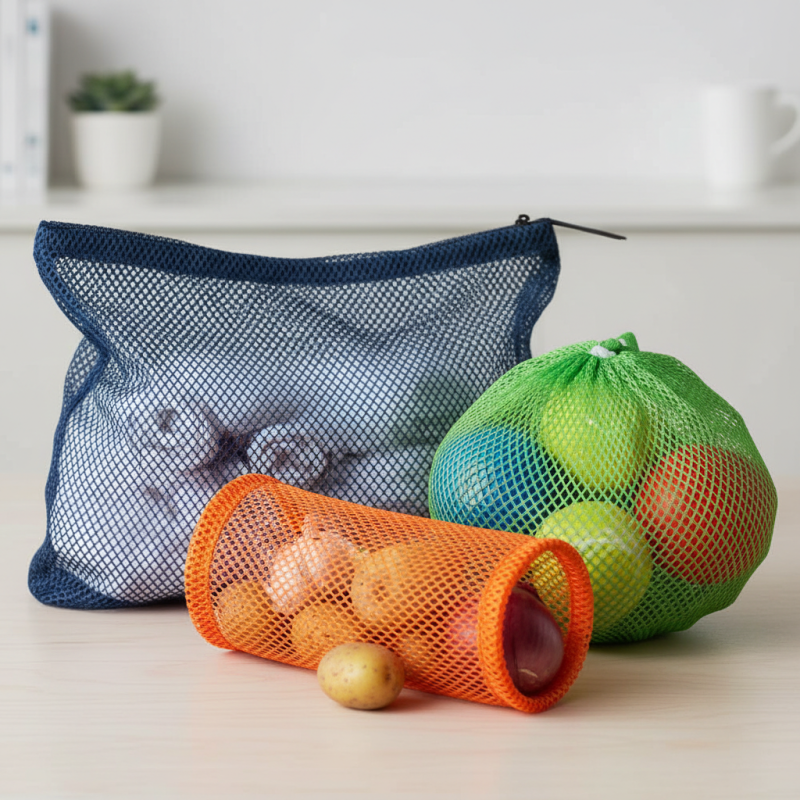
What is a Tubular Mesh Bag and How is it Used?
A Tubular Mesh Bag is a versatile storage solution. It is crafted from durable mesh material, allowing visibility of contents inside. These bags come in various sizes and shapes, making them suitable for multiple uses.
Typically, Tubular Mesh Bags are found in sports, laundry, and even food preparation. They assist in organizing items, preventing items from tangling or mixing together. For instance, in a laundry setting, socks can be stored in these bags, reducing the chances of losing them. In sports, they can hold equipment, keeping it safe and secure.
While Tubular Mesh Bags are practical, they are not without limitations. They may not be ideal for very small or sharp objects. Some users may find the mesh doesn't provide enough protection for fragile items. These factors require reflection on the bag's suitability for specific needs.
What is a Tubular Mesh Bag and its Key Characteristics?
A tubular mesh bag is a versatile tool widely used across various industries. It is primarily made from durable, breathable materials that allow air and moisture to circulate. This design helps prevent spoilage, making these bags ideal for both storage and transportation. Tubular mesh bags have gained popularity, with the global market expected to reach approximately USD 2.5 billion by 2026, according to a recent industry report.
One of the key characteristics of tubular mesh bags is their lightweight structure. They are often used in agriculture for harvesting fruits and vegetables. Their breathable nature ensures that produce stays fresh during transit. Additionally, these bags resist tearing, which enhances their durability. Many users note that they appreciate the ability to see through the mesh, allowing for quick inventory checks. However, the quality of mesh can vary, raising concerns about standardization in production.
Despite these advantages, there are areas for improvement. Some businesses report issues with sizes not being consistent. This can lead to challenges in logistical planning. Furthermore, while tubular mesh bags are eco-friendly, they still contribute to waste if not disposed of properly. Educating users about recycling options could enhance sustainability. This dual perspective on utility and environmental impact invites further contemplation.
The Manufacturing Process and Materials Used in Tubular Mesh Bags
Tubular mesh bags are versatile and robust. They serve various purposes, including packaging, storage, and organization. The manufacturing process of these bags involves specific materials and techniques. Typically, nylon or polyester is used for their strength and durability. These materials are woven into a mesh fabric, providing breathability and flexibility.
During production, the mesh is cut into tubular shapes. This shape allows for easy filling and ensures contents remain secure. The edges are often stitched or sealed to prevent fraying. Some manufacturers may add coatings for extra strength or to enhance resistance to environmental elements. A well-made tubular mesh bag can last for years.
Tip: When choosing a tubular mesh bag, consider its size and weight capacity. Not all bags hold the same amount.
Using the right materials during production is crucial. However, some manufacturers might cut corners. This leads to bags that tear easily or don’t perform well under pressure. Always inspect the bag before use.
Tip: Regularly check your bags for wear and tear. Address any issues early to prevent future disappointments.
Usage of Tubular Mesh Bags for Different Applications
Applications of Tubular Mesh Bags in Various Industries
Tubular mesh bags are versatile and find applications across several industries. The food packaging sector benefits significantly from these bags. They provide excellent breathability, allowing fruits and vegetables to stay fresh. A study showed that over 60% of produce retailers recognize the value of breathable packaging. This helps in reducing spoilage and extending shelf life, but does rely on proper storage conditions.
In the industrial sector, tubular mesh bags are used for the packaging of products like hardware and automotive parts. Their robust construction handles heavy loads efficiently. According to industry reports, the demand for durable packaging solutions is rising at a rate of 7% annually. However, the challenge remains in the recycling of these materials. Many end-users lack awareness about proper disposal methods, leading to environmental concerns.
The gardening industry also utilizes tubular mesh bags for plant protection. These bags act as a barrier against pests, yet not all bags provide the same level of protection. Some may degrade quickly under sunlight exposure. This raises questions about their long-term effectiveness. As industries evolve, re-evaluating material choices in tubular mesh bags is crucial to balance practicality and sustainability.
Advantages of Using Tubular Mesh Bags Over Traditional Packaging
Tubular mesh bags are gaining traction in various industries. Their applications range from packaging produce to securing smaller items. One major advantage of these bags is their breathability. The mesh design allows for air circulation, which helps prevent moisture buildup. This is crucial in the food industry, where spoilage can lead to significant losses. Reports suggest that fruits and vegetables packed in these bags have a shelf life extension of up to 25%.
Unlike traditional packaging, tubular mesh bags are lightweight and easy to handle. This feature reduces shipping costs. Studies indicate that businesses using mesh bags can save up to 15% on transportation expenses. Furthermore, they are often reusable and made from recyclable materials, addressing sustainability concerns. While their durability is commendable, some bags may not withstand heavy weights as effectively. This is a factor for consideration when opting for mesh over conventional options.
The visual appeal of tubular mesh bags cannot be ignored. Their vibrant colors and textures can enhance product presentation. However, some customers might prefer the traditional look of solid packaging. It’s a reminder that while innovation is vital, consumer preferences should guide packaging choices. Balancing performance with aesthetics is essential for success in today's competitive market.
Market Trends and Statistics in the Tubular Mesh Bag Industry
The tubular mesh bag market has seen significant growth in recent years, driven by increasing demand across various industries. According to a recent industry report, the global tubular mesh bag market is projected to grow at a compound annual growth rate (CAGR) of 5.5% from 2023 to 2030. This growth is attributed to the rising preference for lightweight, durable packaging solutions.
One interesting trend is the environmental shift towards sustainable materials. More companies are opting for recyclable and biodegradable options in their tubular mesh bags. In 2022, approximately 30% of producers reported using eco-friendly materials. However, the challenge remains in balancing cost and sustainability. Many manufacturers struggle with sourcing affordable, green materials while maintaining quality.
Regionally, North America and Europe continue to dominate the market, accounting for over 60% of total sales. Yet, emerging markets in Asia-Pacific show potential for rapid expansion. The demand for tubular mesh bags in agriculture and food packaging sector is particularly noteworthy. Research indicates that this sector alone could represent a market share increase of nearly 25% by 2025, reflecting changing consumer habits.