How to Use Desizing Enzymes for Effective Fabric Preparation?
In the textile industry, effective fabric preparation is crucial for achieving high-quality results. An industry expert, Dr. Michael Adams, states, "Using desizing enzymes can significantly enhance fabric quality and efficiency." This insight highlights the value of desizing enzymes in removing starch, which is essential for preparing fabrics for dyeing and finishing processes.
desizing enzymes function by breaking down starch-based size materials applied to fabrics during weaving. This process is not only effective but also environmentally friendly. However, the application of desizing enzymes can be tricky. If misused, the enzymes may fail to remove all sizing agents, leading to poor dye uptake. A balance must be struck to ensure optimal results.
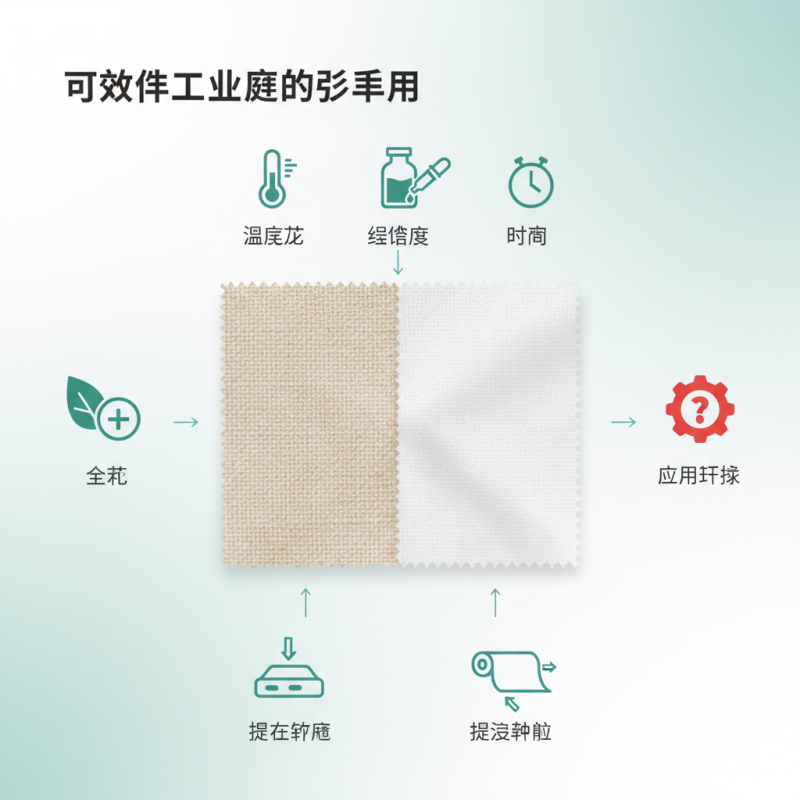
Consideration of factors such as enzyme concentration, temperature, and timing plays a vital role in the desizing process. Each fabric type may respond differently to desizing enzymes. Achieving consistent results often requires testing and adjustment. Continuous reflection on these variables is necessary for improvement in the fabric preparation process.
Understanding Desizing Enzymes and Their Role in Fabric Treatment
Desizing enzymes play a critical role in fabric treatment. These enzymes help remove sizing agents that can hinder the dyeing and finishing processes. When fabric is prepared for production, sizing gives it stiffness and strength. However, it also needs to be eliminated for better dye absorption. Without proper desizing, the final product may have uneven colors and poor quality.
Different types of desizing enzymes target specific sizing materials. Amylase, for example, effectively breaks down starch-based sizing agents. The effectiveness of these enzymes depends on factors like temperature and pH. Sometimes, the results are not as expected. Improper enzyme selection can leave residual sizing, affecting fabric quality. It’s essential to monitor these conditions carefully.
The process can be challenging and requires attention to detail. Some fabrics may respond well to enzymes, while others might not. It's important to test the fabric in small batches. Adjusting enzyme concentrations can lead to different outcomes. Learning from these experiments can enhance the treatment process over time.
Types of Desizing Enzymes: Amylases, Cellulases, and Others
When preparing fabrics, desizing enzymes play a pivotal role. There are different types of desizing enzymes, including amylases and cellulases, that effectively remove sizing agents. Amylases break down starch-based sizes, turning them into simple sugars. This process makes it easier for fabric to absorb dyes and finishes. Cellulases, on the other hand, target cellulose-based sizes, enhancing the softness and appearance of cotton fabrics.
Tips: Always test enzyme concentration on a small fabric sample. This helps gauge effectiveness and prevent over-processing. Monitoring the temperature is crucial, as enzymes have optimal ranges for activity.
Other types of enzymes may also be used, such as proteases and pectinases. These can further assist in the desizing process by breaking down proteins and pectin in the fabric. However, using multiple enzyme types can introduce complexities. Each enzyme may react differently, leading to inconsistent results. As a result, one must tread carefully when mixing enzymes.
Tips: Keep a detailed record of enzyme combinations used. Note their effects on various fabrics. This can provide insights for future processes. Remember, experimentation is key, but too much experimenting without data may lead to confusion.
The Process of Applying Desizing Enzymes in Fabric Preparation
Desizing enzymes play a crucial role in fabric preparation. They help remove starch and other size materials from woven fabrics. This process is essential for ensuring that the fabric can be properly dyed and finished. When applying desizing enzymes, attention to detail is key. The temperature and pH levels can significantly affect enzyme performance.
Start by selecting the right enzyme for your fabric type. Different fibers require different enzymes. It's vital to test the enzyme on a small fabric sample first. This way, you can see how the fabric reacts. Sometimes, results may not be as expected. You might notice uneven removal or damage to delicate fibers. Adjusting enzyme concentration or soaking time could remedy this.
Monitoring the process is essential. Ensure that the fabric is completely immersed in the enzyme solution. Stirring the solution occasionally helps achieve uniform action. After desizing, thorough rinsing is necessary to remove any residual enzymes. If not rinsed properly, they can interfere with the dyeing process later. Reflecting on these details will improve your fabric preparation process.
Desizing Enzymes Effectiveness in Fabric Preparation
Best Practices for Effective Use of Desizing Enzymes
Desizing enzymes are crucial for preparing fabrics before dyeing or finishing. Their proper use can greatly enhance fabric quality. Here are some best practices for effective use.
Start with a careful selection of the enzyme. Different fabrics require different enzymes. Conduct tests to identify the most suitable variant for your specific materials. Check the temperature and pH levels recommended by the enzyme supplier. Deviating from these can lead to suboptimal results. Monitor the concentration as well. Too much enzyme can weaken the fibers, while too little may not remove all the size.
Timing also plays a vital role. Too short exposure may not fully desize the fabric. Conversely, excessive time can damage the weave. Regularly inspect the fabric texture during the process. Look for signs of over-treatment, like fraying or color change. Document the results for future reference. Keep in mind, even small adjustments in the process can yield noticeable differences in fabric quality. The goal should always be to achieve consistency and efficiency in production.
How to Use Desizing Enzymes for Effective Fabric Preparation? - Best Practices for Effective Use of Desizing Enzymes
| Parameter | Recommended Value | Notes |
| Enzyme Concentration | 0.5 - 1.0% w/v | Adjust based on fabric type for optimal results. |
| Temperature | 50 - 60°C | Higher temperatures can enhance enzyme activity. |
| pH Level | 6.0 - 7.0 | Maintain to ensure enzyme stability and activity. |
| Duration | 30 - 60 minutes | Monitor for fabric type; avoid over-treatment. |
| Rinsing Temperature | 20 - 30°C | Use cooler water to help stop enzyme activity. |
| Additional Treatments | Follow with neutralization step | Ensure complete deactivation of enzymes. |
Measuring the Effectiveness of Desizing: Key Indicators and Outcomes
Measuring the effectiveness of desizing enzymes is crucial for fabric preparation. Several key indicators help to assess how well these enzymes perform. One important indicator is the reduction in fabric weight post-desizing. If the weight loss is minimal, the enzymes may not be functioning effectively. Observing the uniformity of fabric softening also plays a vital role. Inconsistent softening can signal that the enzyme application might require adjustments.
Another significant outcome is the improvement in dye uptake. Adequate desizing should enhance how well the fabric absorbs dyes. Testing different batches can reveal inconsistencies in outcomes. It's necessary to reflect on aspects like enzyme concentration and application time. Understanding these variables can help optimize results. Additionally, visual inspection for any residual starch or sizing agents is essential. Any visible residues can indicate ineffective desizing, thus necessitating further investigation.