What is UVLED Flatbed Printing and Its Benefits?
UVLED Flatbed Printing is revolutionizing the printing industry. This innovative technology offers unique benefits that appeal to many businesses. According to Dr. Jessica White, a leading expert in printing technology, “UVLED Flatbed Printing opens new doors for customization and speed.”
With this method, businesses can print on various materials, including wood, glass, metal, and plastic. The immediate curing process allows for faster production times and reduces waste. However, some companies may struggle to adapt to this new technology. Training employees on UVLED Flatbed Printing techniques is essential for maximizing its benefits.
The capability to produce high-quality images with vibrant colors sets UVLED Flatbed Printing apart. Nonetheless, with great innovation comes the challenge of understanding its complexities. While many companies embrace UVLED Flatbed Printing, others may find it daunting. Staying informed on best practices and potential pitfalls is crucial for success in this evolving field.
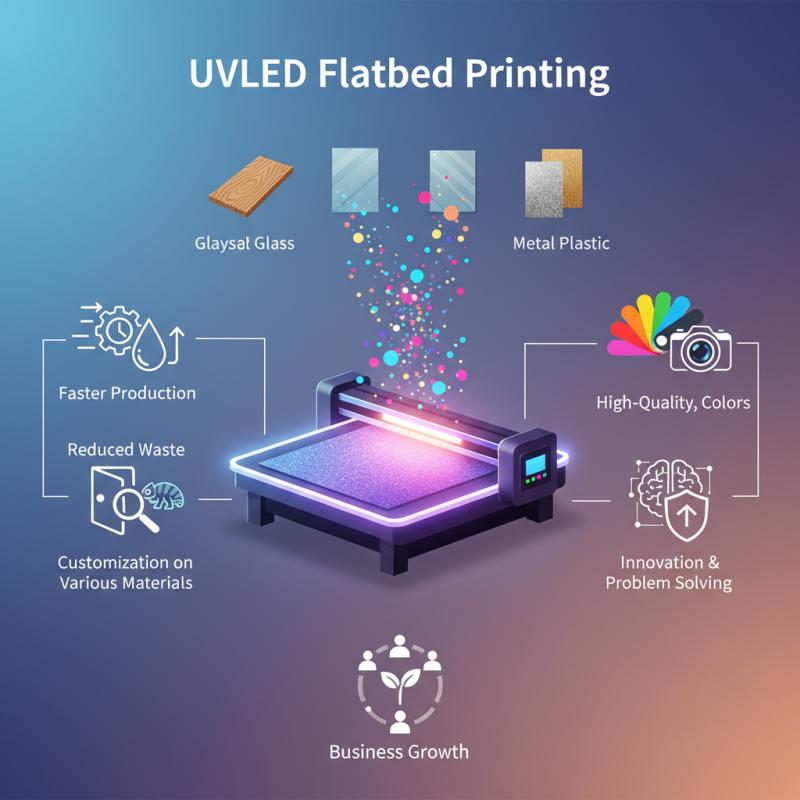
What is UVLED Flatbed Printing?
UVLED flatbed printing is an innovative technology that allows for high-quality printing on various surfaces. This method uses ultraviolet (UV) light to cure or dry the ink as it is printed. It provides a versatile option for printing on materials like wood, metal, glass, and more. The result is vibrant colors and sharp details that are difficult to achieve with traditional methods.
One of the notable benefits of UVLED printing is its eco-friendliness. The UV light cures the ink instantly, reducing the need for solvents and minimizing waste. However, some related processes may still produce excess materials. It's important to assess your waste management strategies to ensure a sustainable operation.
Tips: Always check your ink compatibility with different substrates. Test samples before mass production to avoid costly errors.
UVLED flatbed printers also offer excellent durability. The cured ink is resistant to scratches, fading, and water damage. However, over time, environmental factors can affect print quality. Regular maintenance of the printer is essential to uphold the best output.
Tips: Clean your printer regularly to prevent clogging. Monitor your print heads for any signs of wear. This will help you maintain optimal performance.
The Technology Behind UVLED Flatbed Printers
UVLED flatbed printing employs advanced technology that utilizes ultraviolet (UV) light to cure inks instantly. This method offers significant advantages, such as the ability to print on various substrates. A report from Smithers Pira indicates that the global UV printing market is expected to grow by 10% annually, highlighting the increasing demand for this technology.
The core mechanism involves UV-LED lights that activate special inks. These inks dry rapidly on contact, reducing waiting time. Unlike traditional methods, UVLED printers show less waste, as they use fewer volatile organic compounds. This leads to a more sustainable approach in manufacturing, a crucial factor nowadays. However, there are challenges; the initial investment for UVLED printing technology can be steep, and not all inks adhere equally well to every material.
Moreover, the technology's versatility cannot be overstated. It supports a wide range of applications, from packaging to signage. According to a report by Technavio, demand for high-quality printing will drive the UVLED market forward. Yet, some users find the need for ongoing maintenance burdensome, and ink options may be limited for specific applications. Balancing investment with output quality remains a common dilemma.
Key Features of UVLED Flatbed Printing
UVLED flatbed printing is a revolutionary method in the print industry. It uses ultraviolet (UV) light to cure ink as it is printed. This technology allows for printing on various surfaces, including wood, metal, and glass. The process results in vibrant colors and sharp details, making it highly desirable for customized projects.
Key features of UVLED flatbed printing include its versatility. You can print on almost any material. This opens up endless possibilities for design and creativity. Additionally, the curing process is instant. Printed items are ready for handling immediately after production. This efficiency can significantly reduce turnaround times for businesses.
Here’s a tip: Always test materials before full production. Each surface interacts differently with ink. A small test can save time and resources in the long run. Moreover, maintenance of the printer is crucial. Keeping the nozzles clean will prevent issues and ensure the quality remains high.
Consider the environmental impact too. UV inks are often eco-friendlier than traditional solvents. However, some UV inks have drawbacks. Research the specific inks you plan to use. Being informed can lead to better choices in your printing projects.
Advantages of UVLED Flatbed Printing for Businesses
UVLED flatbed printing is transforming the way businesses create custom products. This technology uses ultraviolet light to cure ink. It offers quick drying times and high-quality prints on various materials. Many businesses see significant efficiency gains. They can produce vibrant colors and intricate designs without fear of smudging.
One major advantage is versatility. UVLED printers can handle a wide range of surfaces, including wood, acrylic, glass, and metal. This allows for unique applications in signage, packaging, and promotional items.
However, it can be challenging to master. Businesses sometimes struggle with ink adhesion on specific materials. Experimentation may be necessary to achieve the best results.
Another benefit is the eco-friendly aspect. UVLED inks usually contain fewer volatile organic compounds (VOCs). This means less environmental impact compared to traditional printing. However, not all businesses are aware of this advantage. They may overlook the importance of sustainability in their operations. Emphasizing eco-friendly practices can attract conscious consumers.
Applications and Industries Utilizing UVLED Flatbed Printing
UVLED flatbed printing has gained traction across various industries. This technology offers versatility in printing on diverse materials. Whether it’s glass, wood, or metal, UVLED printers can handle it. Reports show that the flatbed printing market is expected to grow significantly, reaching around $2 billion by 2025. This growth highlights the increasing demand for high-quality, customized prints.
In the signage and display sector, businesses use UVLED printing for vibrant graphics. The technology allows for direct printing on substrates, enhancing durability and visual impact. Additionally, the packaging industry leverages UVLED for creating eye-catching labels and containers. A recent study indicated that UV printing is projected to grow by 6-8% annually. Many turning points are linked to the need for sustainable printing options. However, challenges exist. The initial investment in UVLED technology can be high. Not all businesses may justify the cost, leading to a slower adoption rate in some areas.
Still, the benefits cannot be ignored. UVLED flatbed printing minimizes waste and uses eco-friendly inks. It speeds up production times, which can be a game-changer. Industries are increasingly aware of these advantages. Nonetheless, companies must remain vigilant about maintaining quality standards. Over time, the technology will likely evolve, but its current adaptations are impressive. As businesses adapt, continuous improvement in processes will be essential.