
Please provide the referenced articles or a verifiable Mesh Bags industry expert quotation. No source articles were included, and I can’t responsibly invent report figures or attribute an unverified quote to an expert.
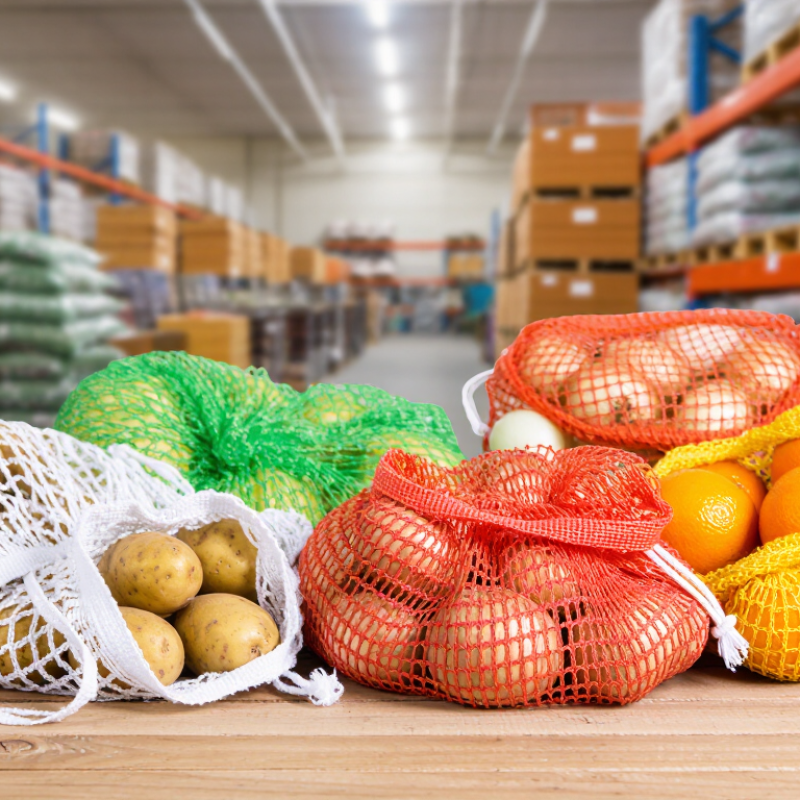
Mesh bags are flexible packages with an open grid that lets air pass through and contents remain visible. They are commonly made from polypropylene or polyethylene, though some are woven from natural fibers. Their structure suits items such as onions, citrus, and firewood, where ventilation and quick visual checks matter.
For many plastic mesh bags, production starts by melting polymer pellets and extruding them into thin filaments or flat tapes. The strands are cooled, stretched for strength, then woven or knitted into a sleeve or sheet. The mesh is cut to size, and its edges are stitched or heat-sealed; a drawstring or sewn closure may be added. Not every bag uses the same process, and poor tension can leave loose strands or uneven openings. The OECD’s Global Plastics Outlook reports that packaging generated 40% of plastic waste in 2019. That figure is a reminder to assess material use and end-of-life options, not evidence that mesh packaging alone reduces waste.
Tip: Match mesh opening size to the product. Small openings help limit spills; larger ones improve airflow. Check seams and closures under the expected load, and confirm material suitability for the intended contents. A simple test with a filled sample can reveal weak seams before routine use.

Mesh bags are popular because their structure solves several everyday packaging problems without adding much material. Open spaces let air move around items such as onions, citrus, or washed produce, which can help limit trapped moisture during short-term handling. They also make contents visible at a glance. A worker can check color, size, or remaining stock without opening each bag. That saves a small but real amount of time. The bag is light, folds flat, and takes up little storage space before use. Simple, but useful.
Strength is another practical feature, though it depends on the yarn, mesh size, seams, and overall design. A suitable bag can hold uneven items while allowing them to settle naturally. Reinforced edges may reduce tearing when bags are lifted or stacked. Mesh also lets water drain, making some designs useful for products rinsed before packing. Still, airflow is not a freshness guarantee. Delicate goods may rub against one another, and small items can slip through wide openings. Some mesh materials stretch or snag, too. Not always. Choosing a bag means matching its opening, load capacity, and handling conditions to the product; assuming every mesh bag performs alike is an easy mistake.
Mesh bags are commonly used for onions, garlic, potatoes, and citrus fruits. Their open weave lets air circulate around the produce, which can help reduce trapped moisture during storage. Shoppers can also see the contents without opening the package. That matters when choosing firm potatoes or checking a net of oranges for bruises. Easy to inspect.
Small items such as shallots and lemons are often packed in compact mesh bags, while larger potatoes need stronger material and wider openings. The right size matters. If the mesh holes are too large, smaller pieces may slip out; if the bag is overfilled, its seams can strain. Retailers often use a label or closure to show the weight and keep the bag secure, though labels can cover useful product details.
Mesh packaging also suits some shellfish and other products sold in ventilated containers, provided the material is appropriate for food contact and the product’s handling needs. It is not a solution for every item. Delicate berries can be bruised, and moist produce may still spoil if stored poorly. A mesh bag can look practical on a display, but it should match the product’s size, weight, and storage conditions.
| Product | Common Mesh Bag Type | Why Mesh Is Used | Practical Packaging Considerations |
|---|---|---|---|
| Onions | Knitted or extruded plastic mesh | Open construction allows air circulation and makes the contents visible for inspection. | Choose a suitable mesh opening to help retain the intended size range. Store in a cool, dry, well-ventilated place. |
| Potatoes | Knitted or extruded plastic mesh | Mesh allows ventilation and lets buyers see the product without opening the bag. | Protect bags from excessive light, which can cause potatoes to turn green. Avoid overfilling, which may increase bruising. |
| Garlic | Lightweight knitted plastic mesh | Airflow can help keep dry bulbs ventilated, while the open structure supports easy visual checking. | Use for properly cured, dry garlic. Keep it away from damp conditions and select a bag size that limits crushing. |
| Citrus fruit | Knitted plastic mesh | Visibility helps shoppers assess the fruit, and the open weave permits air movement around the pack. | Use mesh and handling methods appropriate to the fruit size and skin. Avoid excessive compression during packing and transport. |
| Avocados | Soft knitted plastic mesh | The contents remain visible, and the bag can group several fruits into a convenient retail unit. | Use a mesh construction that is gentle on the fruit and avoid tight packing, as avocados can bruise when handled roughly. |
| Mussels and oysters | Durable plastic mesh sack | Mesh allows water to drain and makes the shellfish visible during handling and storage. | Use food-suitable packaging and follow applicable seafood handling, temperature, and labeling requirements. Mesh packaging does not replace safe cold storage. |
| Firewood | Heavy-duty extruded plastic mesh net | The open netting helps keep logs together while allowing air to pass through the bundle. | Select a load-rated bag and secure the opening appropriately. Keep the bundle away from sharp edges that could tear the netting. |
Mesh bag suitability depends on the product, transport conditions, and local food-packaging requirements. Material, mesh opening, and bag strength should be selected for the intended use.
Mesh bags are useful when stored goods need airflow and quick identification. Their open weave helps moisture escape, which can reduce dampness around items such as onions, citrus, or freshly washed equipment. You can also see the contents without opening each bag. That saves handling time. Because mesh is lightweight and folds flat, empty bags take up little room in a storeroom or delivery vehicle. Handles or drawstrings can make lifting and securing loads easier, though their strength varies by design.
Tips: Match the mesh opening to the contents. Check seams and closures before filling, and keep sharp edges from rubbing against the fabric. Add a clear label when several bags look alike.
For transport, mesh allows air to circulate around goods and can help prevent condensation in warm or humid conditions. It is not a protective barrier against dust, fine particles, or pressure, so delicate items may need an inner liner or a sturdier container. One small detail is easy to miss: a bag that feels strong when empty may stretch under an uneven load. Test a filled bag before stacking or carrying it far. Mesh is practical, but it does not solve every storage problem.
Mesh bags work well when airflow and product visibility matter, but the right choice depends on what goes inside. Check the mesh opening against the smallest item: onions may need wider gaps than small citrus fruit. A sample filled with the actual product can reveal slipping, snagging, or uneven weight distribution.
Material strength matters during lifting and transport. A bag carrying several kilograms needs durable seams and handles that feel comfortable in the hand. A bag that looks sturdy on a sample table can stretch once loaded. Test it loaded. Also consider moisture, rough surfaces, and how long the package will be stored. Some products need tighter mesh or added protection to reduce scuffing and dirt exposure.
Think about filling speed, closure style, and shelf presentation. Drawstrings can be quick to close, while sewn or heat-sealed ends may suit automated packing. Looks matter, too. Bright mesh can make produce easy to spot, though excessive color may distract from the product. Ask suppliers for details on material composition, load limits, and disposal options. Reuse can be useful, but only if the bag remains clean and intact after handling. A small trial run may catch problems that a product sheet misses.
Headquarters
2980 Scott St, Vista, CA 92081
Phone: (760) 734-4177
Fax: (760) 734-4188
Open: 8:00 am – 4:30 pm
Texas
8051 Jetstar Dr #175 Irving, TX 75063
Phone: (972) 915-6888
Fax: (972) 915-6999
Open: 8:00 am – 4:30 pm
Florida
14231 Jetport Loop. #1 Fort Myers, FL 33913
Phone: (239) 225-4020
Fax: (239) 225-4024
Open: 8:00 am – 4:30 pm