Choosing the best Filling Machine in 2026 starts with the product, not the brochure. A clear juice, thick sauce, foaming detergent, and heat-sensitive cream behave differently at the nozzle. Their viscosity, particle size, temperature, and container shape all affect accuracy and line speed. A machine that performs well in a supplier’s showroom may struggle with your actual bottle and formula. That gap matters.
Packaging engineer Alex Morgan offers this practical rule: “Choose the machine for the product you run, not the product you hope to run.” Treat that as a selection principle, not a substitute for a production trial. Ask suppliers to test your product in your container. Watch for drips, inconsistent fill levels, splashing, and slow changeovers. Get the results in writing.
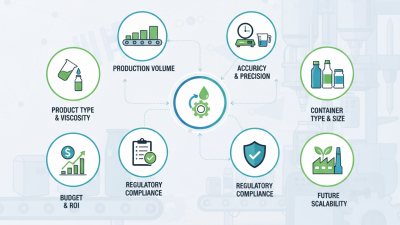
This guide examines the decisions that shape a reliable purchase: filling technology, target output, dosing accuracy, cleaning requirements, controls, service access, and room for future growth. It also considers the less glamorous details, such as how quickly an operator can remove a nozzle or clean a product-contact part. Those minutes add up. A neat spreadsheet can still miss them.
Not every plant needs the fastest line. Some need gentle handling; others need easier changeovers or dependable support. The best choice balances performance with the people who will run and maintain it. And, honestly, no checklist catches every edge case. Use the criteria here to narrow your options, then verify the machine under realistic operating conditions.
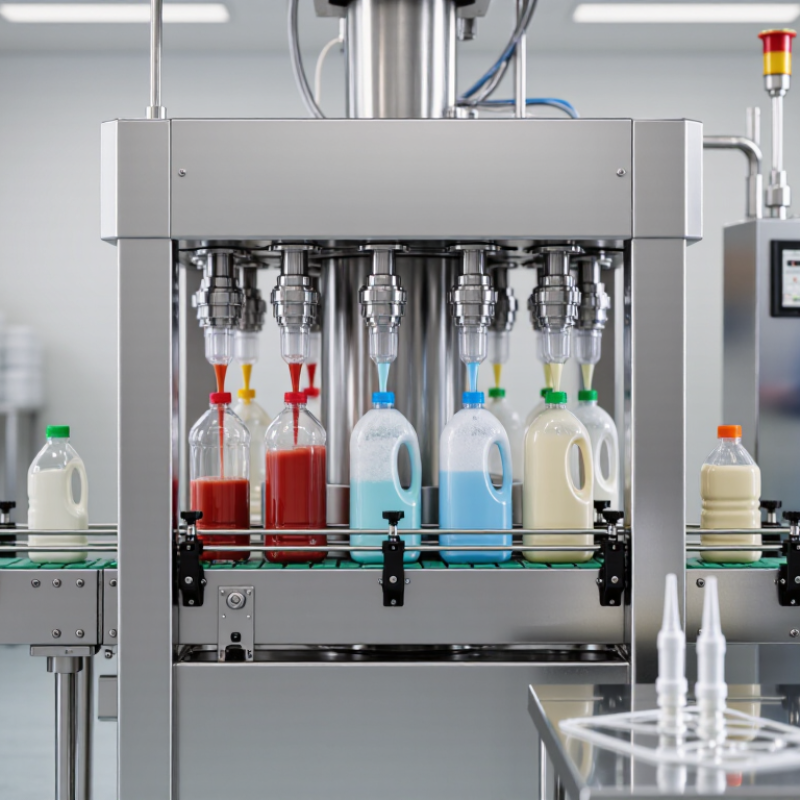
Before comparing filling machines, define the product’s behavior. Is it thin like water, viscous like honey, or particulate, with seeds or pulp? Measure viscosity at operating temperature, not just at room temperature. Note foaming, acidity, and whether the product settles between batches. These details affect pump choice, fill accuracy, cleaning time, and nozzle design. A sample test beats a guess.
Container geometry matters just as much. Record opening diameter, material, shape, and target fill volume; a narrow-neck bottle may need a different nozzle than a wide-mouth jar. PMMI’s 2024 State of the Industry report places U.S. packaging machinery shipments in the roughly $10 billion range, reflecting a substantial and evolving equipment market. That scale is not a reason to buy faster than needed. Calculate actual good units per hour, including changeovers, cleaning, and operator pauses. Small details matter.
Then define the production reality: shifts per day, product changes per week, acceptable giveaway, and room for future growth. Ask suppliers to run your product through the proposed system using your containers, and record fill-weight variation and changeover time. I would not rely on a brochure speed alone; it can conceal a messy setup. A simple test log makes comparisons more reliable.

The right filling technology depends on how your product behaves, not just its label. Thin liquids, such as water-like solutions, often suit gravity or flow-meter filling. A piston system can handle thicker products like creams and sauces with controlled portions. Watch the container during a trial: foam, splashing, or slow settling can change fill accuracy. Small details matter.
For liquids with pulp or small particles, check that valves and nozzles can pass the largest pieces without clogging. Peristaltic pumps can be useful for gentle, measured transfer, while piston fillers are often considered for products with more body. Neither choice is automatically better. Product temperature and viscosity may shift during a production run, so test both at realistic conditions.
Powders need a different approach. An auger filler measures product through a rotating screw, while free-flowing granules may work better with a weigh-based system. Dust, bridging in the hopper, and inconsistent particle size can affect repeatability. Ask for trials using your actual product and packaging, then inspect the first, middle, and final containers.
Not always. A machine that performs well with a sample may behave differently over a longer run, especially if the product settles or separates. Keep room for cleaning, changeovers, and adjustments in your selection.
Evaluate Accuracy, Speed, Automation, and Compliance Needs
Choosing a filling machine begins with the product and package, not a catalog feature list. Test the actual material at its normal temperature and viscosity. Record fill weights during startup, steady operation, and changeover. Small drifts matter. A machine that performs well in a short demonstration may behave differently after several hours.
Compare speed using saleable output, not the advertised cycles-per-minute figure. Include bottle spacing, operator checks, changeovers, and rejected containers in your estimate. Ask for a timed trial using your own containers and a clearly defined acceptance range. Then consider automation. Sensors and recipe controls can reduce routine adjustments, but they also require setup and maintenance. If staffing is limited, a simpler system may prove more dependable.
Compliance needs should guide equipment materials, records, guarding, and cleaning access. Confirm that contact surfaces, calibration records, and cleaning procedures fit your product and facility requirements. Keep supporting documents accessible, and train operators to record exceptions, not just successful checks. Forecasts are rarely exact. One useful question is whether the line can handle realistic growth without running at maximum speed every day.
The purchase price is only one part of a filling machine’s cost. Include installation, operator training, change parts, energy use, and expected product loss. Estimate costs across a full year, not just a busy shift. A machine that fills 500 bottles per minute may look efficient, but frequent changeovers can erase that advantage. Test your actual container sizes and product viscosity before comparing quotes.
Maintenance affects output every day. Check whether operators can reach seals, valves, and fill nozzles without lengthy disassembly. Ask how quickly common spare parts can be supplied, and whether routine service requires a specialist. Downtime costs. A simple log of stoppages, cleaning time, and rejected containers can reveal expenses that a sales estimate misses. Still, service needs vary by product and plant; one checklist will not fit every line.
Future flexibility matters when package sizes or production volumes change. Compare adjustment ranges, changeover time, and the cost of adding another filling head or format. Confirm that controls can share useful production data with existing equipment. Avoid paying for capacity you cannot use. Forecasts are often wrong. A sensible choice balances today’s throughput with realistic room to adapt, while leaving enough budget for maintenance and staff training.
Illustrative equipment-budget model for three machine configurations (USD thousands).
How to read it: Semi-automatic equipment has the lowest example cost, while modular equipment costs more upfront but may better accommodate new products or higher throughput. Compare maintenance requirements, changeover needs, and upgrade compatibility against your production plan. These figures are planning estimates, not market averages or supplier quotes; they exclude labor, installation, utilities, taxes, and financing.
A filling machine should fit the product, container, and daily production target—not just the sales quotation. Verify the supplier’s experience with similar materials and package shapes. Ask for references, service response times, spare-parts availability, and operator training details. Request a live test using your product and containers. Watch the fill level, changeover time, and cleanup process. Small details matter. A nozzle that drips after each cycle can create waste and slow a shift.
Compare more than the advertised speed. Ask how accuracy is measured, and request test results across several runs. Check whether the machine handles your product’s viscosity, foaming, or temperature range. Confirm the footprint, power requirements, and room needed for maintenance. A compact unit may look ideal until an operator cannot reach a valve comfortably. Get the agreed performance limits in writing. Then compare manual, semi-automatic, and automatic options against realistic staffing and output needs. It is easy to overestimate future demand; that deserves a second look. A well-matched machine may be less impressive on paper, yet more dependable during an ordinary production day.
Headquarters
2980 Scott St, Vista, CA 92081
Phone: (760) 734-4177
Fax: (760) 734-4188
Open: 8:00 am – 4:30 pm
Texas
8051 Jetstar Dr #175 Irving, TX 75063
Phone: (972) 915-6888
Fax: (972) 915-6999
Open: 8:00 am – 4:30 pm
Florida
14231 Jetport Loop. #1 Fort Myers, FL 33913
Phone: (239) 225-4020
Fax: (239) 225-4024
Open: 8:00 am – 4:30 pm